Łukasz Sagun
2026-03-25
•
5
min
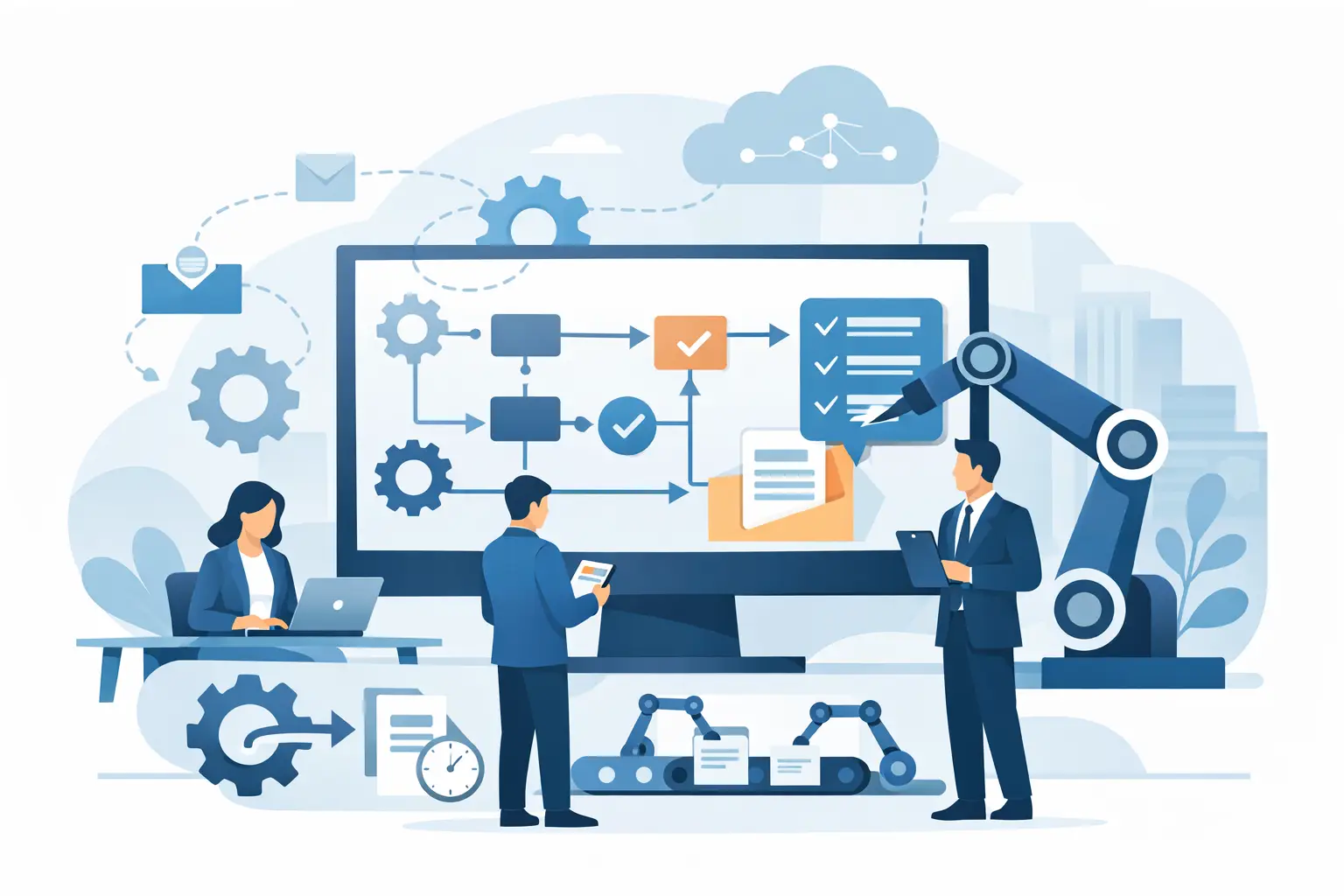
When an administrative department continues to move data between spreadsheets, email inboxes, and paper logs, costs rise silently. Not in the "IT" budget, but in labor time, delays, recording errors, and avoidable purchases. This is precisely why automating administrative processes is no longer a "nice-to-have" for the future—for many organizations, it is now a prerequisite for maintaining operational control.
In practice, the biggest problem isn't that processes are manual. The problem is that they are fragmented. Some information resides in the financial system, some in local files, some in emails, and some in the specific knowledge of individual employees. This model works until the company scales, undergoes an audit, or needs an urgent inventory. That is when it becomes clear that the organization lacks a single, reliable view of its data.
In many organizations, automation is mistakenly equated with a single document workflow or an online form. That is not enough. Effective automation covers the entire sequence of actions: from data entry, through verification and approval workflows, to reminders, audit trails, reporting, and compliance control.
In the area of administration, this is particularly evident in processes related to company assets. Registering a fixed asset, assigning equipment to an employee, changing a device's location, preparing for inventory, reporting a disposal, or confirming financial liability—each of these steps generates data and decisions. If handled manually, the organization pays for it repeatedly: through slower work, more errors, and weaker control.
Automation, therefore, means more than just "fewer clicks." It means a predictable process where it is clear who performed an action, when, on what basis, and what the current status of the matter is.
The highest costs usually come not from spectacular mistakes, but from daily repetition. An employee re-enters the same information into multiple registers. Someone else searches for an inventory number in an old email. Another person makes phone calls to remind others to update data. At scale and across multiple locations, this model simply becomes expensive.
This is particularly visible in organizations that manage a large number of assets. Without a central repository, it is difficult to quickly determine what the company owns, where a given asset is located, who is using it, and whether it requires maintenance, relocation, or disposal. As a result, unnecessary purchases, operational downtime, and friction between administration, finance, and equipment users occur.
The second area of loss is compliance and auditability. If the history of changes is not recorded automatically and documentation is scattered, preparing data for audits consumes time and involves many people. This is not just an administrative burden; it is also a risk that the organization will be unable to quickly demonstrate that it is operating in accordance with procedures.
Not every administrative process requires the same level of digitization. The best results come from areas that combine high repeatability, a large number of participants, and the need to work on up-to-date data.
In practice, these are most often processes involving the registration and circulation of information about fixed assets and equipment, handling location and liability changes, inventory, deadline reminders, administrative approvals, and reporting for finance and operations. The more steps that currently depend on manual information transfer, the greater the potential return on automation.
It is important to note: it is not always best to start with the most complex process. Often, a better decision is to organize the basics—centralizing data and standardizing statuses—before launching advanced scenarios. Without a common data model, even the best workflow will only move chaos around faster.
The most visible effect is time savings. The administration no longer needs to track deadlines, manually update registers, or clarify which version of the data is correct. The system takes over notifications, approval paths, change logging, and access to a single, current database of information.
The second benefit is error reduction. When data is entered once and reused throughout the process, the risk of discrepancies between departments decreases. This is particularly important where a single piece of information affects administration, accounting, inventory, and compliance simultaneously.
The third benefit is better cost control. The organization gains a clear view of its actual assets, making it easier to identify underutilized resources and avoid unnecessary purchases caused by a lack of visibility. In practice, this means not only faster administrative processing but also better operational decision-making.
Organizational resilience is also significant. When processes are not dependent on the memory of specific individuals, it is easier to maintain operational continuity despite staff turnover, absences, or scaling.
Technology is important, but it does not solve the problem on its own. If an organization lacks agreed-upon rules for record-keeping, responsibilities, and asset statuses, automation will only cement existing inconsistencies. Therefore, a successful implementation begins with a process map and answers to a few simple questions: what data is truly needed, who is responsible for it, when does a status change occur, and what action should the system trigger?
The quality of input data is also critical. Many projects are slowed down not by user resistance, but by source registers that are incomplete or maintained using different standards across various locations. This is a stage that should not be rushed. Data integrity is the foundation of automation.
The implementation model is also essential. In medium and large organizations, a phased approach works better than attempting to launch everything at once. Start with data centralization and basic scenarios, then move on to subsequent processes and reporting. This model delivers business results faster and reduces the risk of overwhelming teams.
Readiness does not mean full process maturity. It means that the scale of the problem has become large enough that manual management is now a barrier. Signs include recurring data discrepancies, long preparation times for inventory, difficulty in locating assets, frequent inquiries about the status of matters, and an excessive administrative burden caused by repetitive tasks.
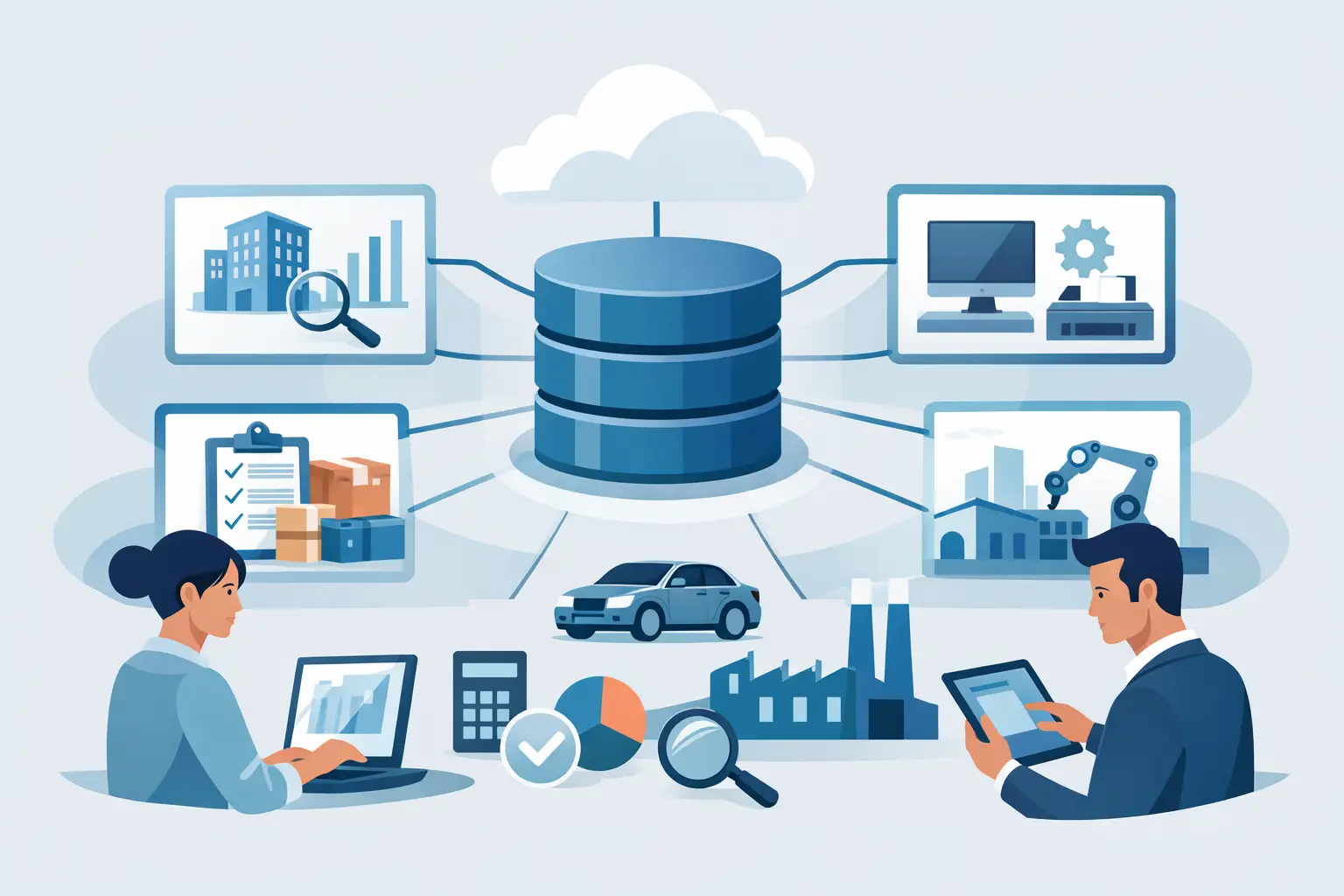
It is also worth looking at the relationship between departments. If finance, administration, and operations use different data sets, natural decision-making tension arises. Everyone is working, but the organization is not working from a single source of truth. This is one of the strongest arguments for adopting a systemic approach.
A well-designed platform organizes this area not just technologically, but operationally. In the model used by EXINO, the combination of the tool and the implementation methodology is key, because the application itself cannot replace well-defined rules for asset management and information flow.
Automation will not make every decision simpler. Many processes still require human judgment—for example, when disposing of an asset, handling procedural exceptions, or assigning responsibility. The system should accelerate standard scenarios and strengthen control, but it does not eliminate the need for oversight.
Furthermore, the biggest benefit is not always staff reduction. In practice, it is more often about reclaiming specialists' time and shifting their focus from technical tasks to control, analysis, and coordination. This is a subtle but very important difference. Well-implemented automation increases administrative productivity rather than just performing the same errors more "cheaply."
If a project is to be taken seriously, it must be measured not by the number of features implemented, but by operational change. The best indicators are reduced administrative processing time, fewer errors in records, faster inventory, shorter search times for asset information, and a reduction in unnecessary purchases.
It is also worth monitoring the timeliness of actions, data completeness, and the number of cases requiring manual intervention. These parameters show whether the organization has gained real process control. Without this, automation remains a technology project. With this approach, it becomes an efficiency project.
Administration does not have to be an area that functions "despite everything." It can operate quickly, predictably, and based on data you can trust. If an organization is growing, working across multiple locations, and managing a large volume of assets, process order is no longer just an advantage. It is a prerequisite for efficient operation.


























.webp)