Łukasz Sagun
2026-03-25
•
5
min

In an organization with multiple locations, hundreds of employees, and thousands of assets, the problem usually doesn't start with a lack of equipment. It starts with a lack of reliable information. Implementing an asset management system brings order to this area where spreadsheets, fragmented registers, and manual reconciliations are no longer enough.
The most costly aspect isn't just the inaccuracies in the records themselves. The real cost arises when an organization buys what it already owns, spends too much time searching for devices, drags out inventory processes, or isn't sure who is responsible for a specific item. In practice, this means a heavier administrative burden, weaker cost control, and the risk of operational errors. That is why an asset management system is not just an IT tool. It is a way to organize responsibilities, data, and purchasing decisions.
The tipping point usually arrives sooner than an organization expects. An increase in the number of locations, higher equipment turnover, or stricter audit requirements are enough to make the existing workflow unsustainable. If asset data is stored in several places, different departments use different versions of information, and inventory requires manual reconciliation, this is no longer just a single process issue. It is a management architecture problem.
This is particularly evident in companies and institutions that operate with distributed assets. Equipment moves to branches, offices, departments, warehouses, and end users. Its location, technical condition, custodian, and usage change. Without a central system, it is difficult to keep data up to date, and even harder to base business decisions on it.
That is why the implementation should be treated as an operational project, not just an IT one. The goal is not to launch an application. The goal is to gain control over the asset lifecycle—from acquisition, through usage and transfers, to disposal or replacement.
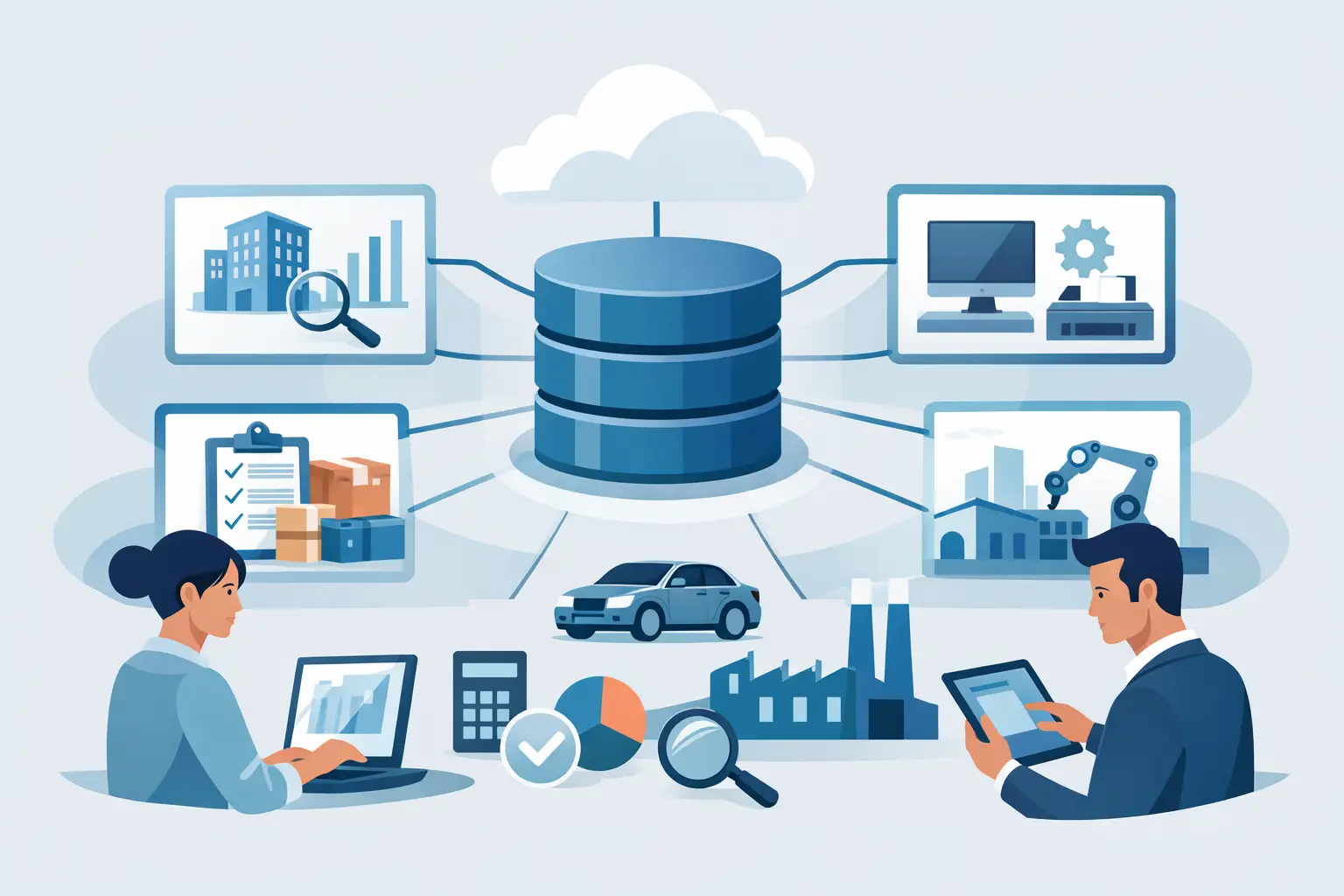
The most important change concerns visibility. The organization begins to work from a single, consistent source of truth. This means that administration, finance, operations, and those responsible for inventory see the same asset status, the same assignments, and the same operational history.
The second effect is a reduction in process handling time. This applies to both daily record-keeping and periodic control activities. When assets are labeled, assigned, and described according to uniform standards, inventory stops being a rescue mission and becomes a planned process. It also takes less time to confirm the location, responsibility, and availability of equipment.
The third area is costs. Better asset control limits unnecessary purchases because the organization can see what it already owns and in what condition. This is a seemingly simple benefit, but it is the one that most often provides a quick return on investment. If the procurement department has access to up-to-date resource data, purchasing decisions are no longer based on guesswork.
Compliance with internal and statutory requirements cannot be overlooked either. The more formalized the environment, the greater the value of organized records, change history, and the ability to reconstruct the chain of responsibility. A system does not replace procedures, but it allows them to be enforced in a repeatable way.
The most common mistake is that an organization starts with the system's features instead of its own processes. Meanwhile, the implementation should be based on the question of which decisions are meant to be simpler, faster, and less risky as a result. Otherwise, it is easy to buy a tool that collects data but does not improve operational performance.
The starting point should be an assessment of the current state. This is not just about counting assets. You need to check where the data comes from, who updates it, which fields are critical, where discrepancies arise, and which processes generate the highest time costs. Such a stage clarifies expectations and allows for a realistic scope of implementation to be set.
Defining a model of responsibility is equally important. In practice, many record-keeping problems do not stem from a lack of a system, but from a lack of clear rules. Who approves a location change? Who assigns an item to a user? Who is responsible for verifying the condition? If these roles are not defined, even the best tool will operate on incomplete data.
In asset management projects, technology only makes a difference when it is built on well-prepared data. This requires standardizing dictionaries, asset categories, location labels, statuses, and methods of assigning responsibility. Without this, a system might run quickly but still produce chaos.
It is best to adopt the principle that implementation is not about migrating all old data one-to-one. Some information requires cleaning, supplementing, or removing duplicates. This is a stage that should not be shortened. Any compromise at the start usually returns later in the form of problems with reporting, inventory, and asset utilization analysis.
A well-prepared data model also allows the system to be developed in stages. An organization does not have to launch every feature at once. It can start with a central registry and inventory, and then expand the project to include monitoring, reminders, movement tracking, or utilization analysis. This approach is often safer than a single, very broad change.
An effective project usually has several constant elements. First, the scope, goals, and success metrics are established. Then, data and processes are organized. Next, the system is configured according to the organization's actual way of working, rather than a generic model. Finally, there is the launch and user support phase.
The latter is often underestimated. Users do not need another tool to manage; they need a simpler way to do their jobs. If a new system lengthens daily tasks or requires bypassing procedures, adoption will be superficial. That is why it is important to tailor the interface, information flow, and scope of responsibilities to the actual practices of specific teams.
In projects for medium and large organizations, the pilot phase is also of particular importance. It allows you to verify whether the data model, labeling method, and inventory process work in real-world conditions. A pilot reduces the risk of costly corrections after a full launch. It also shows where procedures are too theoretical and require simplification.
Any change that organizes responsibility also reveals previous gaps. For this reason, resistance does not always stem from an aversion to technology. It often arises from a fear of greater transparency. The system shows who is assigned equipment, what has been handed over, what has not been confirmed, and where data is outdated.
This natural tension must be taken into account in the project. Implementation requires communication based on specifics: why we are changing the process, what we will simplify, how much time we will save, and what risks we will mitigate. The more a project is presented as a tool for control for the sake of control, the harder it is to gain cooperation. The more clearly it shows operational benefits for departments, the faster it builds acceptance.
In practice, a partnership-based implementation model works well, where the provider does not just launch the platform but helps organize the process logic. This is exactly what organizations managing large and distributed assets expect: not another system to click through, but a solution that reduces the number of exceptions, errors, and manual reconciliations. This is the role played by an approach that combines technology with implementation methodology, as in the model developed by EXINO BUSINESS SYSTEMS.
If an implementation is to be evaluated seriously, metrics must be established from the beginning. These most often include inventory time, the number of discrepancies, the time required to find information about an asset, the share of unnecessary purchases, and the number of manual interventions in the registry process. Only these indicators show whether the system truly improves asset control.
It is worth remaining realistic, however. Not every effect appears immediately. Organizing data and stabilizing new procedures takes time. Usually, the reduction of administrative tasks and better information availability are visible the fastest. More advanced benefits, such as purchasing optimization or fuller resource utilization, appear when the organization begins to consistently work with data from the system.
This is what distinguishes a superficial implementation from an effective one. In the first case, the system exists, but decisions are still made outside of it. In the second, it becomes the operational point of reference for administration, finance, and teams responsible for assets.
A well-executed asset management system implementation organizes more than just the registry. It organizes the way the entire organization operates around the resources it pays for and uses every day. And that very quickly translates into what matters most in business: fewer losses, less guesswork, and more fact-based decisions.






















.webp)