Łukasz Sagun
2026-03-25
•
6
min
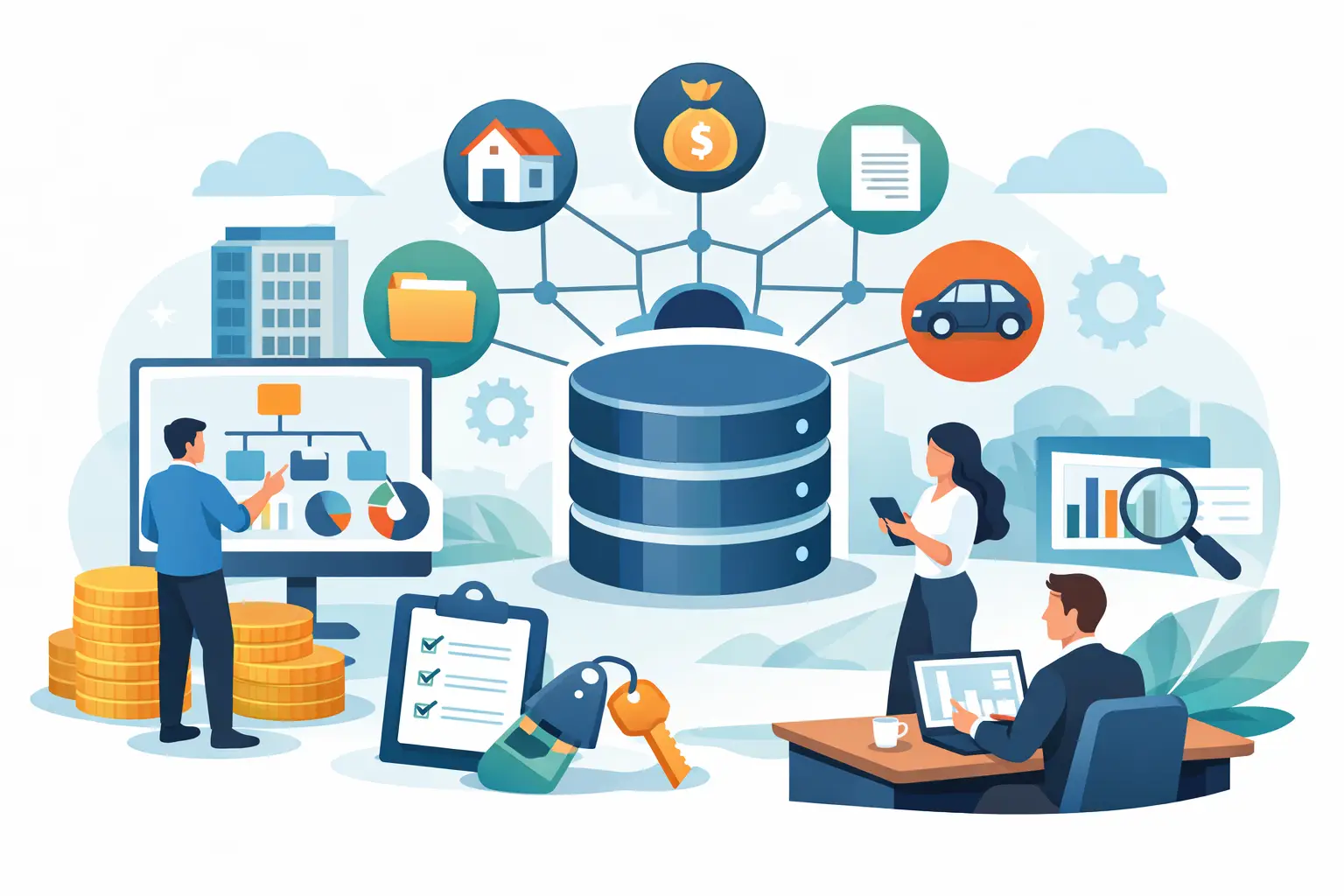
When an organization has assets scattered across branches, departments, and users, the problem is usually not a lack of data itself. The problem is that this data lives in multiple spreadsheets, the financial system, emails, and the individual knowledge of employees. This is precisely why the question of how to implement a central asset register is not just about an IT tool. It is about regaining control over costs, accountability, and the flow of information.
A central register organizes fixed asset records, equipment, mobile devices, and low-value assets in a single environment. For administration, it means less manual work. For finance, it means greater data consistency. For operations, it means faster access to information about location, status, and the person responsible. But this effect does not appear just by purchasing a system. It is determined by how it is implemented.
The most common mistake happens at the start. An organization wants to move everything to the new system immediately, without first determining what data is actually needed and who will be responsible for it. As a result, inconsistent descriptions, duplicate records, and outdated locations end up in the central register. The system starts working, but it does not provide a reliable picture of the assets.
A better approach is both simpler and more demanding. First, you must define the business goal. In one organization, the priority will be to shorten inventory time. In another, it will be to limit unnecessary purchases. In yet another, compliance with procedures and the ability to quickly demonstrate who is using a given item and where it is located will prove crucial. This goal should set the direction for the entire project, as the scope of data, the accountability model, and the reporting method all depend on it.
Before launching the register, it is worth mapping out how assets function in practice. Who requests a purchase, who assigns an inventory number, who assigns an item to a location, and who records transfers, repairs, disposals, or changes in users? In many companies, these activities exist but are scattered across administration, accounting, purchasing, and operational departments.
A central register works best when it organizes the entire lifecycle of an asset. If it only covers the moment of intake, and subsequent changes are still handled via email or phone, a gap between the actual state and the system state will quickly emerge. It is at this stage that you must determine which events must be recorded and within what timeframe.
Not every record needs to contain dozens of fields. An overly complex structure at the start often lowers data quality because users enter information randomly or leave gaps. It is much better to adopt a standard of a mandatory minimum that truly supports operational and record-keeping control.
In practice, this usually includes the asset category, inventory number or identifier, location, user or responsible unit, acquisition date, status, and a link to the source document. Only in the second step is it worth expanding the register with service data, warranty information, photos, movement history, or maintenance schedules. This approach shortens implementation time and reduces the risk of the project getting bogged down in discussions about fields that no one will use later.
If a company has kept records in several sources for years, migrating data without organizing it will only move the problem to the new system. Therefore, the data cleaning stage is not an add-on, but a prerequisite for the project's success.
First, it is worth identifying duplicates, old naming conventions, inactive locations, and records without a process owner. Then, you need to establish dictionaries—for example, common names for locations, asset categories, statuses, or organizational units. Without this, reporting will be unreliable because the same group of devices could appear under several different names.
In large-scale organizations, it is particularly important to separate reference data from operational data. Locations, organizational structure, and the category catalog should be managed centrally. In turn, events concerning a specific asset can be handled locally, but according to a common standard. Such a model allows for order without overly centralizing daily work.
Technology organizes data, but it does not replace accountability. If no one is responsible for the accuracy of information on the business side, the register quickly becomes just an archive of entries. Therefore, during implementation, you must clearly assign roles.
Most often, you need a register owner at the central level who is responsible for the standard, data completeness, and process quality. Alongside them, local or area users work to record changes in assets and confirm the accuracy of the actual state. It is also worth defining which operations require approval and which can be performed automatically based on established rules.
This is particularly important in multi-site environments, where the same type of equipment may be frequently moved between locations. Without clear responsibility for data updates, even the best system will fail to show where a given asset is actually located. This leads to unnecessary purchases, delays, and the risk of errors during inventory.
Many companies want to immediately launch alerts, codes, mobile inventory and integrations with other systems. This is a good direction, but with one condition: you must first stabilize the core process. Automating a mess only accelerates the creation of errors.
However, if the foundation is solid, automation quickly delivers measurable results. Reminders about inspections, expiring contracts, missing data, or scheduled inventories take the burden off administration. Mobile confirmation of asset presence shortens field work. Meanwhile, a history of changes in one place facilitates audits and the resolution of discrepancies.
A phased approach works best here. Start with a central registry and data standardization. Then, handle movements, responsibilities, and statuses. Only later should you introduce automated tasks, management reports, and integrations. A system implemented this way begins to drive business results much faster.
Not every organization needs to include every minor item in a central registry from day one. Sometimes it is better to start with groups that generate the highest costs, the most volatility, or the strictest procedural requirements. These could be fixed assets, IT equipment, medical apparatus, mobile gear, or assets used across multiple locations.
This is a strategic decision. A scope that is too narrow will reduce the business impact, as part of the assets will remain uncontrolled. A scope that is too broad may prolong the project and overwhelm the implementation team. Therefore, it is worth assessing where the organization is currently losing the most time and money. That is exactly where the central registry should be introduced first.
A well-implemented system allows you to answer very specific questions faster: how much of a certain type of equipment do we have, where is it, who is using it, when was it last verified, and is it really necessary to buy more? This is not a matter of convenience. It is the foundation for rational purchasing decisions and better resource allocation.
The go-live moment does not end the project. It is only the moment when you can start counting the results. If an organization does not establish success metrics beforehand, it will be difficult to assess whether the central registry has actually improved asset control.
The most useful metrics relate to time, data quality, and costs. In practice, it is worth measuring the reduction in inventory time, the drop in the number of discrepancies, the decrease in emergency purchases, the increase in the share of assets with assigned responsibility, and the time required to reconstruct an asset's history. Such data shows the board the real impact of the project, rather than just the fact that another tool has been implemented.
In many organizations, the full effect of centralization is only visible after a few months. When data is up-to-date and processes are consistent, departments stop operating in information silos. Some manual reconciliations disappear, it becomes easier to plan purchases, and it is simpler to demonstrate compliance with internal and statutory requirements. That is when the registry stops being just a record and becomes a tool for operational control.
Platforms implemented in a partnership model, such as the solutions developed by EXINO BUSINESS SYSTEMS, have an advantage where the application alone is not enough. With distributed assets, methodology, implementation order, and the ability to translate data into the organization's daily practice are key.
So, if you are considering how to implement a central asset registry, do not start by asking about system features, but by asking which decisions should be faster and more reliable because of it. A well-designed registry does more than just organize assets. It restores control to the organization where guesswork, manual workarounds, and costly uncertainty previously prevailed.


























.webp)