Łukasz Sagun
2026-03-25
•
7
min

When an organization has five branches, hundreds of devices, and dozens of users responsible for equipment, the problem usually doesn't start with a lack of assets, but with a lack of control. The question of how to control assets across multiple locations most often arises when costs grow faster than the scale of operations, and the administrative department increasingly works reactively rather than process-oriented.
In practice, distributed assets generate three types of risk. The first is information risk—data on fixed assets and equipment is incomplete, duplicated, or stored in several places. The second is operational risk—equipment changes location or user without the records being updated. The third is cost risk—the organization buys new resources even though it already owns some, but cannot quickly identify and utilize them.
Therefore, effective control is not just about maintaining a register. It is about building a work model where every change regarding an asset is centrally visible, process-confirmed, and reproducible at any time.
The most common mistake is that organizations try to manage distributed assets locally while reporting them centrally. This is reverse logic. If data is created in spreadsheets, emails, and local reports, headquarters receives a delayed and incomplete picture. Such control only works on paper.
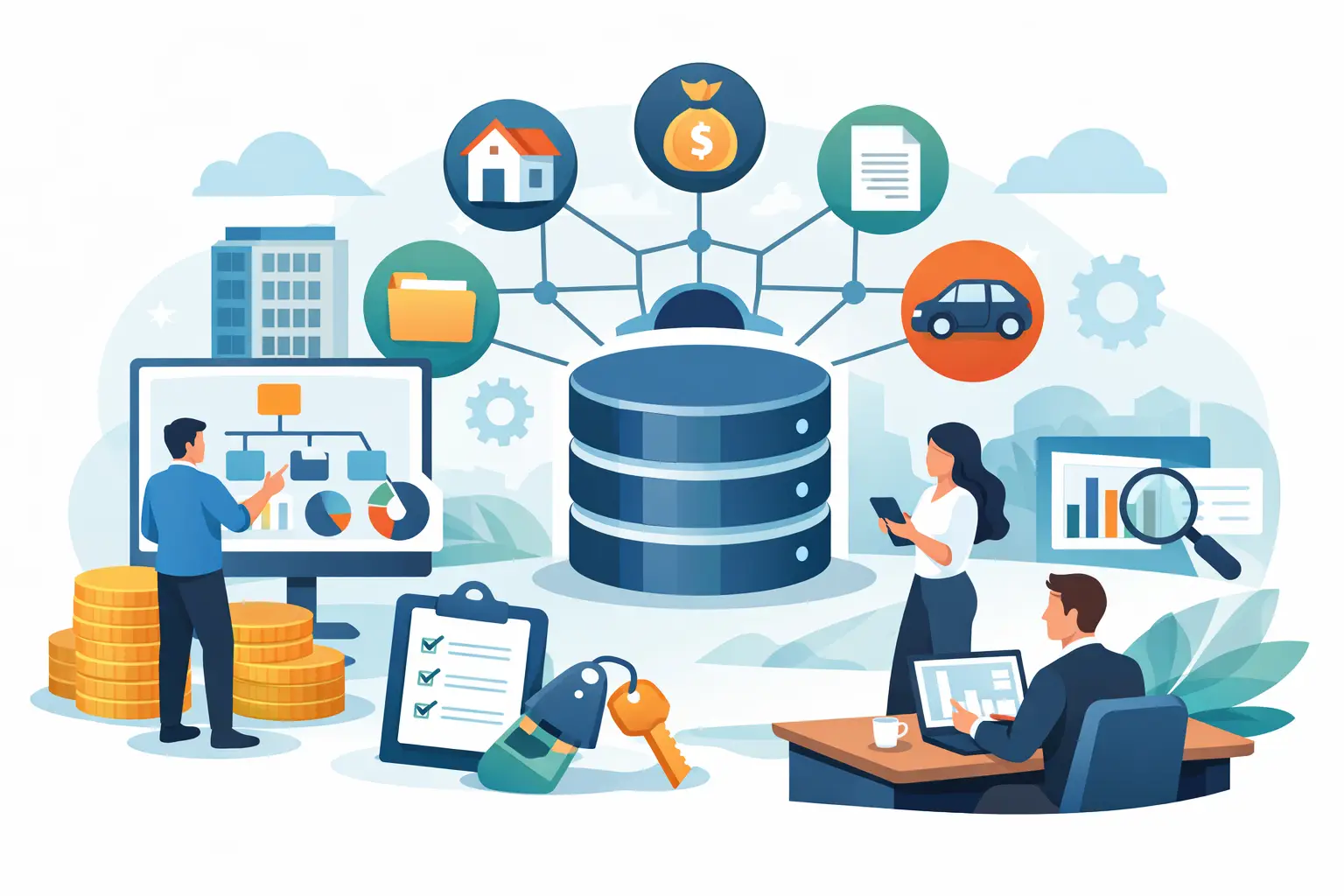
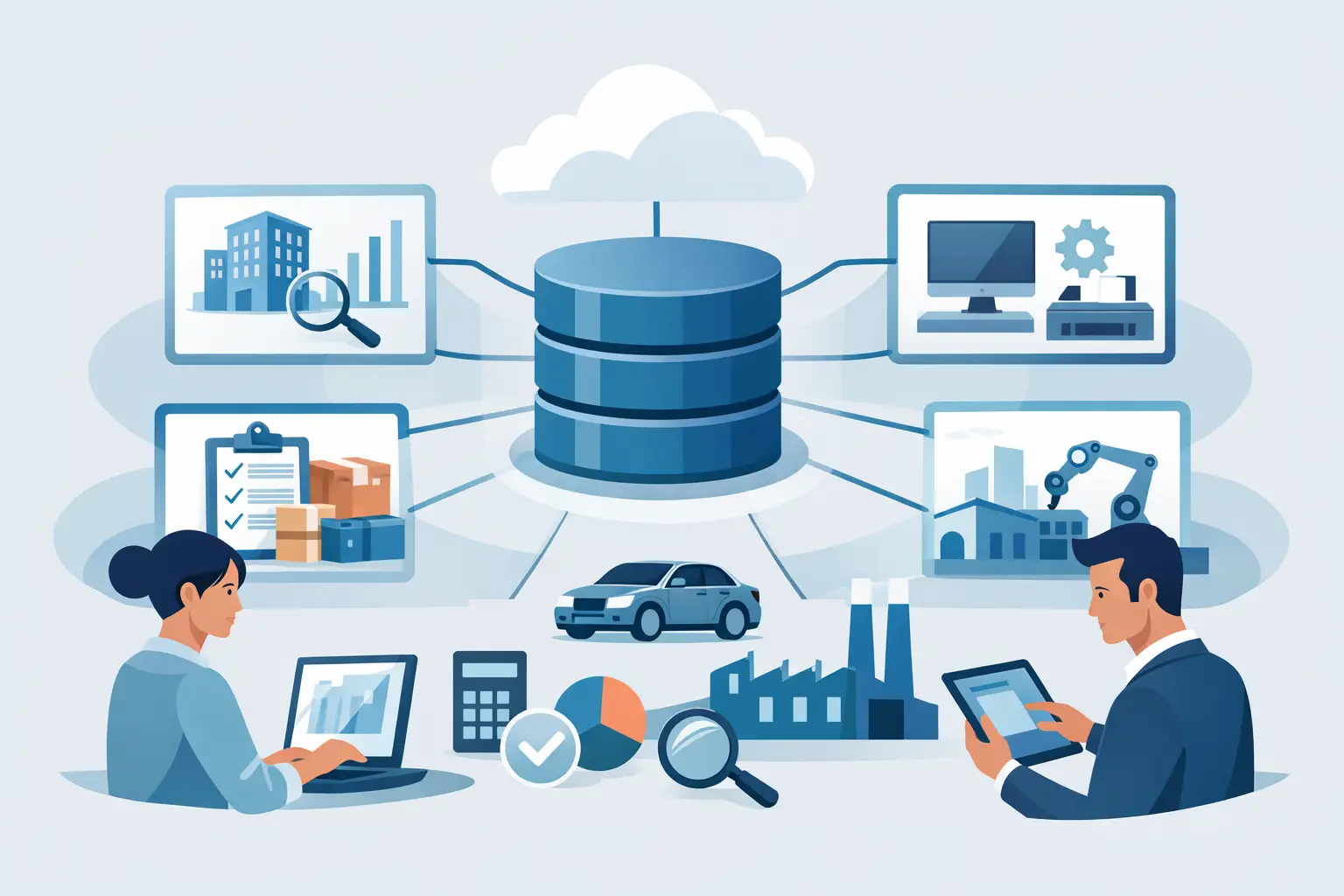
The starting point should be a single source of truth for the entire organization. This means a central data repository for assets, covering location, responsibility, status, movement history, documentation, and deadlines related to inventory or inspections. Without this, even the best-organized team will waste time manually reconciling information.
However, centralization does not mean taking responsibility away from field units. On the contrary, every location should have a clearly defined role in updating data and confirming changes. The difference is that all these actions go into one system, following the same rules.
If an organization wants to truly control assets across multiple locations, it must start by organizing its master data. This stage is less flashy than implementing new tools, but without it, automation will only accelerate errors.
It is worth checking whether the same fields and definitions are available for every asset. Naming conventions alone can be a problem. In one location, a device is listed as a medical monitor, in another as a diagnostic screen, and in a third by the manufacturer's name. To a human, these might be the same object. To a reporting system, they are three different categories.
Standardization should cover names, classification, assignment to locations, responsible persons, identification numbers, funding sources, and usage status. The more uniform the data model, the easier it is to analyze resource utilization and detect irregularities.
This is also the moment to separate mandatory data from useful data. Not every piece of information is needed by every department, but the lack of key fields quickly impacts records, inventory, and settlements.
In many organizations, records look correct only until the first piece of equipment is moved between locations. Then the discrepancies begin: one status in the financial system, another in local documentation, and yet another in reality. This shows that the problem is not the lack of an inventory, but the lack of a change management process.
Every asset goes through a specific lifecycle—from purchase and receipt, through usage, relocation, service, or temporary decommissioning, to disposal. If an organization wants to maintain control, each of these changes must have a defined path, responsibility, and confirmation in the system.
The best-functioning models are those where asset movement is not an informal decision between units, but a recorded and approved event. Thanks to this, headquarters sees not only where a given item is now, but also why it was moved there, who approved it, and how long it has been at that location.
This has a direct impact on costs. When an organization sees the flow of resources, it can move assets to where they are needed instead of automatically initiating new purchases.
When assets are geographically dispersed, managing everything through spreadsheets and email is ineffective. This model might work on a small scale, but once you have a dozen or more locations, it starts to generate delays, errors, and a dangerous reliance on specific individuals.
A well-designed platform for asset management streamlines daily operations in three key areas. First, it centralizes data, eliminating multiple local versions of the same information. Second, it automates repetitive tasks such as reminders, status updates, and inventory preparation. Third, it provides real-time visibility into the entire organization without the need for manual report consolidation.
This is especially critical where assets are used dynamically—for example, in multi-branch organizations, public entities, or the healthcare sector. In these environments, equipment is heavily used, frequently changes location, and is subject to strict documentation requirements. A lack of up-to-date data quickly leads to unnecessary operational friction.
However, simply implementing a system is not a silver bullet. If the tool does not reflect the organization's actual processes, users will find ways to bypass it. Therefore, technology must be paired with a clear methodology and defined responsibilities.
In many companies, the scale of the problem only becomes apparent during the inventory process. Suddenly, it turns out that some equipment is assigned to outdated locations, some has no assigned user, and some is operating completely off the grid. This means the organization has been operating with an incomplete picture of its assets for most of the year.
A more effective model involves ongoing updates and preparation for inventory throughout the year. In this case, the physical count is not a rescue mission, but a validation of data quality. The difference is significant. The team focuses not on manually resolving discrepancies, but on quick verification and closing the process.
In practice, this means shorter inventory times, less burden on local staff, and fewer corrections after the count is finished. For a multi-location organization, this is not just a detail—it is a tangible saving of time and operational costs.
One of the less obvious consequences of poor asset control is redundant purchasing. When unit managers cannot see resources available at other locations, purchasing decisions are made based on local shortages rather than the actual status of the entire organization.
This is where central asset visibility delivers immediate business value. If you can check before buying whether an item already exists in another unit, is unused, or can be transferred, the organization reduces spending without compromising equipment availability. These types of savings often materialize faster than the full return on the system implementation itself.
However, you must account for reality. Not all assets are suitable for transfer between locations. Sometimes, constraints include transport costs, technical requirements, user liability, or internal procedures. Therefore, the goal is not maximum resource rotation, but informed, data-driven decision-making.
Dispersed assets are usually lost not in a physical sense, but in terms of accountability. Many organizations assume that because an item is in a specific unit, someone is definitely looking after it. The problem arises when you need to quickly determine exactly who is responsible for data accuracy, confirming locations, or reporting status changes.
A good management model involves a clear separation of roles. Someone is responsible for ownership oversight of the process, someone for record-keeping, someone for local status confirmation, and someone for decisions regarding transfers or disposals. When these roles are invisible, the system only works as long as specific individuals remember to keep it running.
In practice, the greatest stability comes from combining central oversight with local execution. The head office defines the standard, monitors compliance, and analyzes asset utilization. Local branches are responsible for confirming changes on time and keeping data current. This arrangement organizes the company without creating unnecessary bureaucracy.
If asset management is to support business decisions, it cannot stop at knowing what is where. You need metrics that show whether the organization is using its resources efficiently.
It is worth analyzing, among other things, the number of transfers between locations, the utilization rate of specific equipment categories, the time required to confirm changes, the scale of inventory discrepancies, and the number of purchases that could have been avoided through internal transfers. These are not just data points for reporting; they are tools for cutting costs and improving operational control.
In this approach, technology is meant to support decision-making, not just archive information. That is why organizations that treat asset management as a component of operational efficiency usually achieve more than those that view it solely as an administrative burden. This is the foundation of modern models like eMajątek 4.0, developed by EXINO BUSINESS SYSTEMS.
Full control over assets across multiple locations does not start with more reports. It starts with the decision that data must be up-to-date, processes must be clear, and accountability must be visible. When these three conditions are met, a distributed structure ceases to be an operational problem and becomes an environment that can be effectively managed.






















.webp)