Łukasz Sagun
2026-03-25
•
6
min

In many organizations, the problem doesn't start with a lack of equipment, but with a lack of certainty regarding where that equipment is, who is using it, and whether the records are still up to date. This is precisely why equipment inventory software is moving beyond being just an administrative add-on to becoming an operational tool for the entire organization. When assets are spread across locations, branches, and users, manual spreadsheets and local registers simply stop being enough.
For medium and large entities, the stakes are clear. Inaccurate records lead to unnecessary purchases, longer audits, higher compliance risks, and wasted employee time spent reconstructing information that should be available instantly. A good tool isn't just for counting chairs, computers, or medical devices; it’s about ensuring control, data consistency, and faster decision-making.
A few years ago, many companies were simply looking for a program to perform a physical inventory count. Today, that is not enough. Equipment inventory software should act as a central environment for managing asset information—from registration and assignment to a person or location, to tracking movement history, confirmations, and reconciling inventory results.
The most important change is that inventory is no longer a one-time event at the end of the year. In a modern model, it is part of ongoing asset oversight. If an organization has up-to-date data throughout the year, the actual inventory process becomes shorter, less contentious, and much easier to defend during an audit.
It is also a matter of accountability. When equipment is assigned to specific users, organizational units, and locations, the typical disputes over who last saw an item or why the physical state doesn't match the register disappear.
A spreadsheet can be a good starting point, but it is not a good asset control system. With a small number of items, it provides a sense of order. With multiple locations, hundreds of users, and frequent changes, it starts to generate more work than savings.
The problem isn't the file format itself, but the lack of processes. A spreadsheet doesn't track change history, doesn't send reminders, doesn't force the completion of critical fields, and doesn't guarantee that everyone is working on the same version of the data. If you add inventory conducted by several teams in parallel, the risk of errors grows very quickly.
In practice, an organization pays for this in several ways. It buys equipment it already owns because no one can locate it quickly. It engages employees in manually reconciling discrepancies. It delays the closing of the inventory process because data still needs to be corrected, completed, and confirmed. This is an operational cost that is usually spread across many departments, so it remains invisible for a long time.
Not every extensive list of features translates into business results. In practice, what matters are the elements that reduce manual tasks and improve data quality during day-to-day operations.
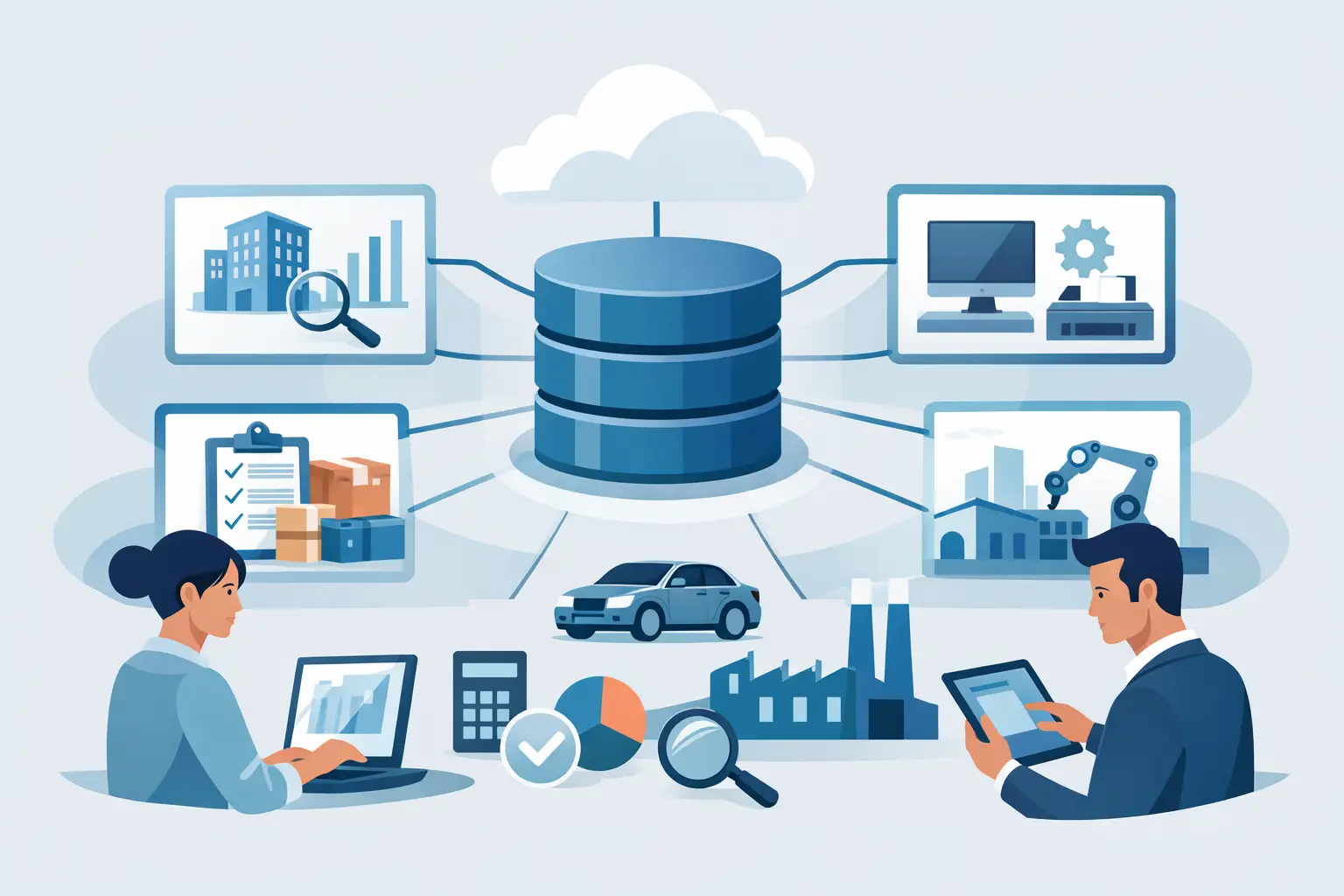
The foundation is a single central repository of equipment information. Each item should have one source of truth: number, status, location, responsible person, documents, change history, and the result of the last verification. Without this, even the best-organized inventory quickly turns into a manual comparison of different registers.
The second area is field identification. Labels, codes, and mobile device support significantly speed up the work of inventory committees. The difference isn't just in scanning speed; it's about reducing errors when transcribing numbers, decreasing the number of missing records, and registering discrepancies immediately.
The third element is workflow. An organization needs a clear task flow: who prepares the scope of the inventory, who confirms responsibility, who reconciles differences, and who approves the results. If the system organizes this process, the inventory time is shortened not only in the warehouse or office but also during administrative reconciliation.
Automatic notifications and validation rules are also essential. A missing assigned user, an incomplete location, or an inconsistent status are small details that grow into major problems during an inventory. A good system catches them beforehand.
In organizations with high procedural requirements, simply counting assets is not enough. You must also demonstrate how the process was conducted, who performed specific tasks, and on what basis the results were approved. This is particularly critical where assets are operationally sensitive or subject to strict accountability rules.
Therefore, the system should support not only field activities but also the audit trail. Change logs, assignment history, document archives, and the ability to reconstruct the process flow provide real value during internal audits, inspections, or when reconciling discrepancies between departments.
It is worth maintaining a balanced approach here. An overly formalized system can slow users down if every action requires multiple levels of approval. Conversely, a model that is too simple will not provide sufficient control. The right choice therefore depends on the scale of the organization, the structure of accountability, and compliance requirements.
Most errors occur when a company buys a tool based on the label "inventory" rather than a real model for managing assets. As a result, the system works correctly during the stocktake but fails to organize data for the rest of the year. This leads to a quick return to manual workarounds and local spreadsheets.
Before implementation, it is worth evaluating four issues. First, whether the system can handle the organization's structure as it really is, rather than just a simplified diagram. Second, whether it allows for clear assignment of responsibility for equipment. Third, whether it supports operations across multiple locations and organizational changes. Fourth, whether it enables reporting that is useful for administration, finance, and operations simultaneously.
The implementation process is equally important. Even the best solution will not be effective if the organization does not standardize its naming conventions, statuses, locations, and responsibilities. Technology accelerates the process, but it cannot replace organizational decisions. In practice, the greatest benefits are achieved by companies that implement a system alongside a methodology for working.
The return on investment in such a solution rarely comes from a single spectacular effect. It is more often composed of a series of savings that were previously scattered and difficult to measure. Shorter stocktake times, fewer people involved, fewer data errors, and fewer purchases made simply because the organization cannot see its own resources—this is where the real financial result appears.
Improving the quality of decision-making is also significant. When a company can see what equipment it has, where it is being used, and how often it is moved, it is easier to plan purchases, relocations, and replacements. Some expenses made out of caution or under the pressure of a lack of information simply disappear.
In large organizations, relieving the administrative burden is also important. The team does not waste time answering basic questions about the status and location of an item, but instead works with organized data. This is an efficiency gain that is not always visible in a single report, but is felt very quickly in daily work.
Not every organization needs an extensive asset management environment right away. If the scale is small, there is only one location, and equipment turnover is low, a simpler solution may be sufficient. The problem begins when the number of items grows faster than the team's ability to keep the data in order.
A warning sign is not just the length of the inventory process. It is also frequent questions about where specific equipment is located, a lack of certainty regarding user accountability, difficulties in reconciling data with finance, and the need to manually check documentation. At that point, the organization no longer needs another file or an ad-hoc improvement. It needs a control system.
This is why more and more companies are looking at the topic more broadly than just through the lens of a physical stocktake. A well-implemented system, supported by the right methodology, organizes the entire equipment lifecycle and provides a lasting operational effect. This approach is developed by, among others, EXINO BUSINESS SYSTEMS, combining the platform with a work model focused on measurable savings and fuller control over assets.
The most sensible choice is not the system with the longest list of features, but one that organizes data, simplifies accountability, and reduces work time where the organization is actually losing money today. If a tool can turn inventory from an annual problem into a constant control process, it starts working toward results from the very first day after implementation.
























.webp)