Łukasz Sagun
2026-03-25
•
5
min
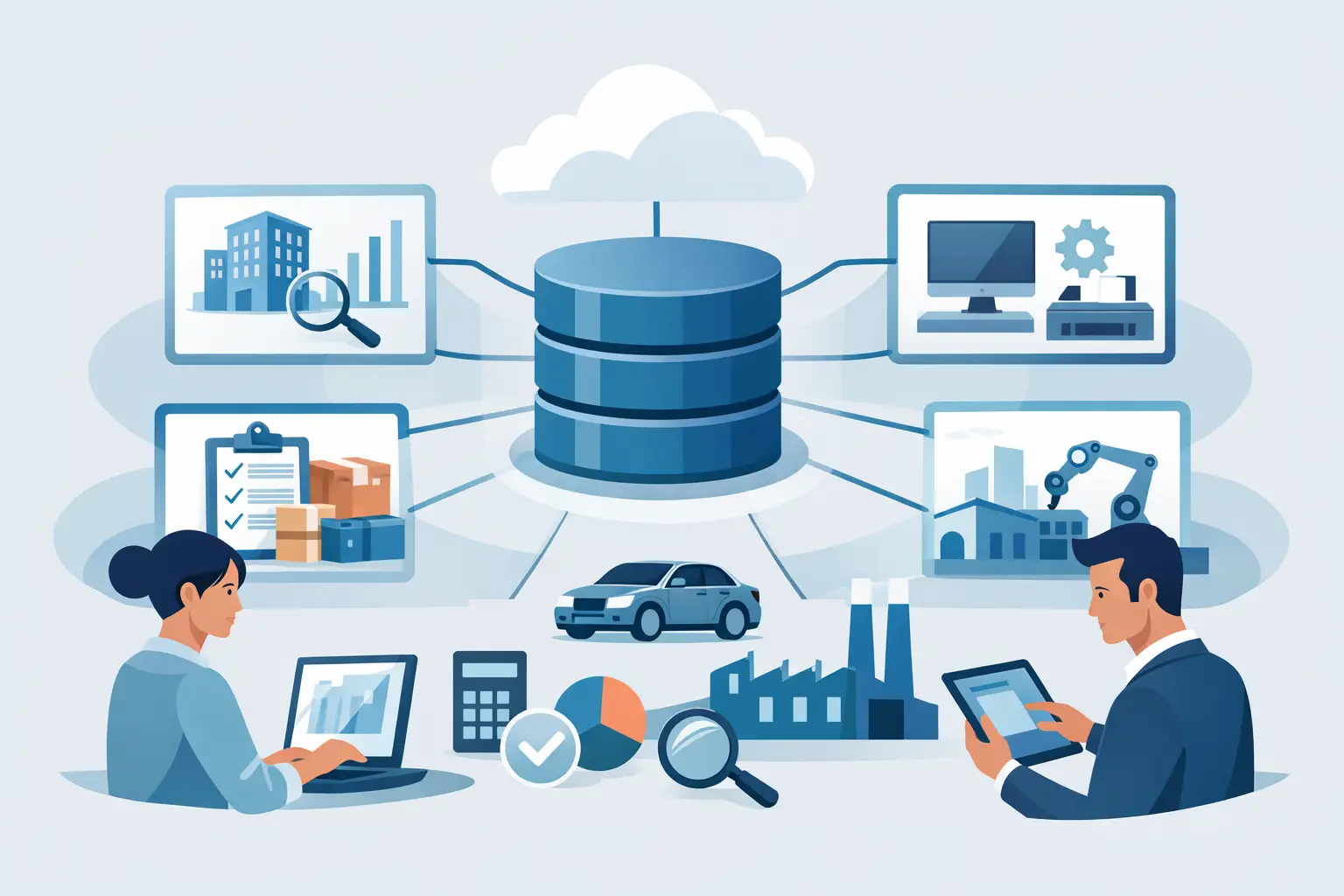
When an organization has hundreds or thousands of assets across multiple locations, the problem is no longer a lack of data. The problem is the lack of a single, reliable source of truth. This is precisely why a central fixed asset database becomes an operational tool, rather than just a convenient add-on for administration or finance.
In many companies, information about assets is still scattered across spreadsheets, financial and accounting systems, paper documentation, and the individual knowledge of employees. This model works only until the first audit, an urgent inventory, or the need to quickly determine where a specific item is located, who is using it, and what its status is. That is when the costs—in terms of time, organization, and money—begin to mount.
A central fixed asset database is an organized repository of an organization's asset data, accessible to authorized personnel across different departments and locations. Its role goes beyond simply storing inventory numbers, purchase dates, and book values. A well-designed database integrates registration, operational, and control information.
This means that in one place, you can see not only the item itself but also its location, assignment to a user or department, movement history, maintenance schedules, inventory status, related documents, and the full history of events concerning that object. For a geographically dispersed organization, such centralization changes the way of working. Instead of searching for information, the team begins to manage it.
Most often, the problem does not look spectacular. It doesn't start with a system failure, but with small, repetitive inefficiencies. Someone doesn't know that a device is available in another branch, so they place a new order. Someone else maintains a local record that differs from the data in the finance department. During an inventory, it turns out that some assets are incorrectly assigned or lack an up-to-date location.
On a monthly scale, this seems like a minor detail. On an annual scale, it means redundant purchases, increased administrative workload, a higher risk of errors, and difficulty in demonstrating procedural compliance. The more dynamically an organization uses its assets, the faster information chaos begins to cost.
That is why data centralization is not just a housekeeping project. It is a decision to reduce losses resulting from a lack of visibility. And visibility is the foundation of control.
The greatest value provided by a central fixed asset database emerges where assets constantly change their context of use. Equipment moves between departments, furniture is sent to new locations, devices require periodic maintenance, and some items stop being used even though they formally remain in the records.
Without a central system, such changes are reported with a delay or not at all. As a result, purchasing, maintenance, and organizational decisions are based on an incomplete picture. With a central database, the situation is reversed. Those responsible for administration, operations, or compliance see the current status of assets and can react based on data, not assumptions.
This is particularly important in organizations with high procedural requirements. There, it is not enough to know that an item exists. You must also be able to prove where it is, who is responsible for it, whether it has been inventoried, and whether its handling was carried out in accordance with procedures.
Centralization alone is not enough if the database is too simplified or does not reflect real-world processes. In practice, a useful database should map the entire lifecycle of an asset—from entry into the records, through usage and movement, to disposal or retirement.
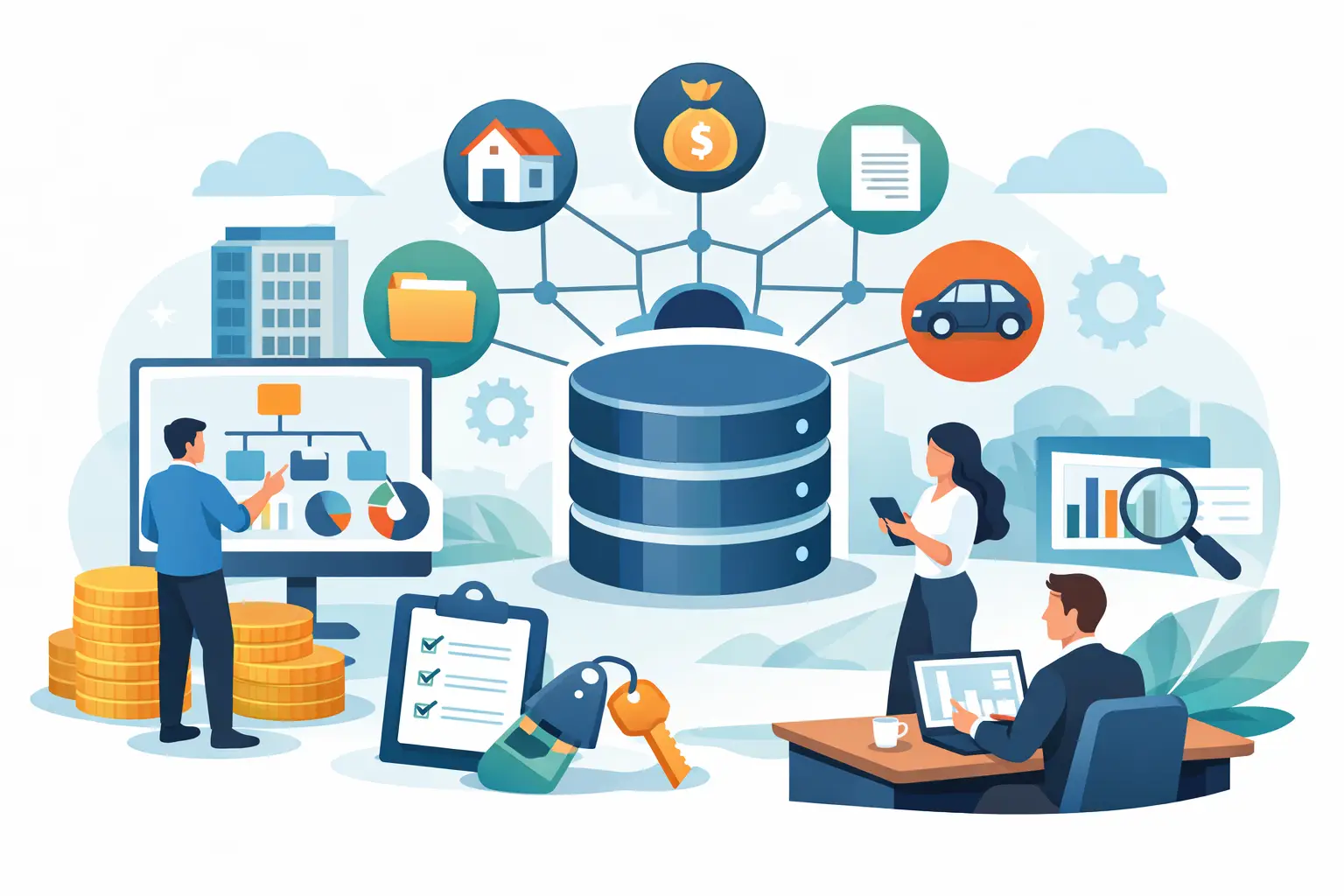
Three layers are key here. The first is basic data, i.e., item identification, parameters, value, classification, and links to documents. The second is operational data—location, user, condition, change history, and action deadlines. The third is the control layer, i.e., inventory status, audit trail, permissions, automatic reminders, and reporting capabilities.
Only the combination of these elements turns the database from an archive into a management tool.
It is a mistake to treat a central database solely as an IT project. Software matters, but it won't solve the problem if the organization doesn't organize responsibilities and data update rules. A common scenario looks like this: a company implements a system, migrates some information, and then reverts to old habits. Data ends up in several places, updates are performed selectively, and users don't know which record is current.
The second common problem is a view of the process owner that is too narrow. When a database is perceived solely as the domain of the accounting department, its operational potential is lost. Meanwhile, the greatest benefits emerge when administration, logistics, technical departments, inventory staff, and cost managers all use the same source.
The third area of risk is a lack of automation. If every change in location, user, or asset status requires manual handling in several places, the database quickly begins to drift from reality. And outdated data provides only a false sense of control.
An effective implementation begins with answering a simple question: what decisions are to be made based on this database? If the goal is just record-keeping, less is enough. If the organization wants to limit redundant purchases, shorten inventory cycles, and improve process compliance, a broader data model and clear working rules are needed.
The first stage is organizing information sources. You must determine where the data comes from, which records are reliable, and which fields must be mandatory. Without this, migration just moves the mess into a new environment.
The second stage is designing the update process. Who reports a location change? Who approves a transfer? Who is responsible for data completeness when accepting a new asset? A well-implemented database separates roles and limits arbitrary decision-making.
The third stage is connecting the records with daily workflows. If the database is to stay alive, it must support operational tasks: inventory, responsibility confirmations, inspections, maintenance, relocations, and reporting. Then, updating data is not an extra chore, but a natural result of the work being done.
In practice, this approach provides the highest return. EXINO BUSINESS SYSTEMS builds this effect not only through its platform but also through an implementation methodology focused on process order and measurable business results.
The most noticeable effect is a reduction in the time needed to determine an asset's status. The team no longer has to contact several people, check various spreadsheets, and compare conflicting records. This saves hours of work per week, and at scale, significantly more.
The second effect is limiting unnecessary purchases. When an organization sees what resources it already has, where they are located, and whether they are being used, it is easier to decide to relocate assets instead of buying new equipment. This is especially important where investment budgets are under pressure and equipment can be expensive.
The third effect concerns inventory. With a central database, the process is shorter, less prone to errors, and easier to reconcile. Data is available sooner, the scope of verification is clear, and discrepancies can be explained more quickly. This reduces the operational burden on departments that usually have to set aside other tasks during inventory.
The fourth effect relates to compliance and auditing. When the history of changes, responsibilities, and statuses is recorded in one place, it is easier for an organization to demonstrate control over its assets. With growing procedural requirements, this is important not only for order but also for reputation.
If a company operates in one location and manages a small number of assets, simpler solutions may still suffice. But with dispersion, high equipment turnover, numerous users, and frequent organizational changes, the lack of a central database quickly becomes a barrier.
The signals are usually repetitive: long preparation for inventory, discrepancies between records and the actual state, purchases made without full knowledge of available resources, difficulty in assigning responsibility, and administrative departments overloaded with manual data entry. This is the moment when it is no longer about improving work convenience. It is about regaining control over assets and costs.
A central fixed asset database won't solve everything on its own. It cannot replace process discipline or fix erroneous data without conscious implementation. However, if well-designed and integrated into the organization's daily operations, it quickly begins to act as the nervous system for asset management—streamlining information flow, reducing response times, and providing a foundation for better decision-making.
In practice, the real value lies not just in having data, but in being able to use it exactly when you need to make a decision about purchasing, relocating, inventorying, or assigning responsibility for an asset. That is where true efficiency begins.

























.webp)