Łukasz Sagun
2026-03-25
•
6
min

Spending half an hour looking for a monitor, accidentally buying equipment you already have, or having no record of who signed for a device—these are the practical consequences of poor equipment tracking. Each of these situations seems minor until it happens simultaneously across a dozen locations with thousands of assets. At that point, it stops being an administrative issue. It becomes an operational cost, a compliance risk, and a barrier to efficient management.
Equipment is usually more dynamic than fixed assets. Phones, computers, furniture, medical devices, tools, scanners, IT hardware, and workstation equipment frequently change users and locations. If your records don't keep up with these movements, the organization loses a reliable view of its resources. Comparing a spreadsheet to reality once a year is not enough. You need a process that records changes the moment they happen.
The root of the problem is rarely a single employee's mistake. Most often, it is a failed work model: data is scattered across spreadsheets, emails, paper documents, and individual departmental systems. Accounting records the purchase, administration hands out the equipment, and the direct supervisor knows about the user change. When this information doesn't reach a single repository, discrepancies arise.
The second problem is confusing tracking with a purchase archive. An invoice confirms that the organization bought a specific item. However, it doesn't answer where that item is today, what condition it is in, who is responsible for it, or if it is still needed. Good tracking should support operational decisions, not just recreate purchase history.
In distributed organizations, the scale of risk grows with the number of locations, hybrid employees, and organizational units. A process that works for 100 items may fail at 10,000. This isn't a matter of being more disciplined with a spreadsheet; it is a need to change the tool and the way information is managed.
Descriptions like "Dell laptop" or "office chair" make it impossible to distinguish between individual units. Without a unique asset number, barcode, or RFID tag, it is easy to assign documentation to the wrong device, duplicate records, or mark an existing asset as missing.
An identifier should be durable, legible, and linked to the asset's file. It is worth storing not just the name and value, but also the serial number, category, location, user, status, and change history. The scope of data depends on the type of asset and the organization's requirements. It will be different for a chair than for medical equipment or a device under service contract.
This is one of the most common ways outdated data is created. Equipment arrives at the company and appears in the records, but the subsequent handover to an employee, transfer to another department, or shipment to a branch is not formally noted. After a few months, no one is sure who the user is or where the item is located.
The solution is to include issuance, returns, transfers, and disposals in the standard workflow. Every operation should have a date, a responsible person, and confirmation. This isn't about adding bureaucracy; it's about ensuring that responsibility for an asset is visible in the system at the moment of transfer, rather than only during an inventory check.
The administration spreadsheet, the IT department list, the warehouse register, and the finance summary may all contain different data about the same equipment. When there is no single source of truth, employees start determining the status of assets by comparing files and exchanging emails. This increases handling time and the risk that purchasing decisions will be made based on incorrect information.
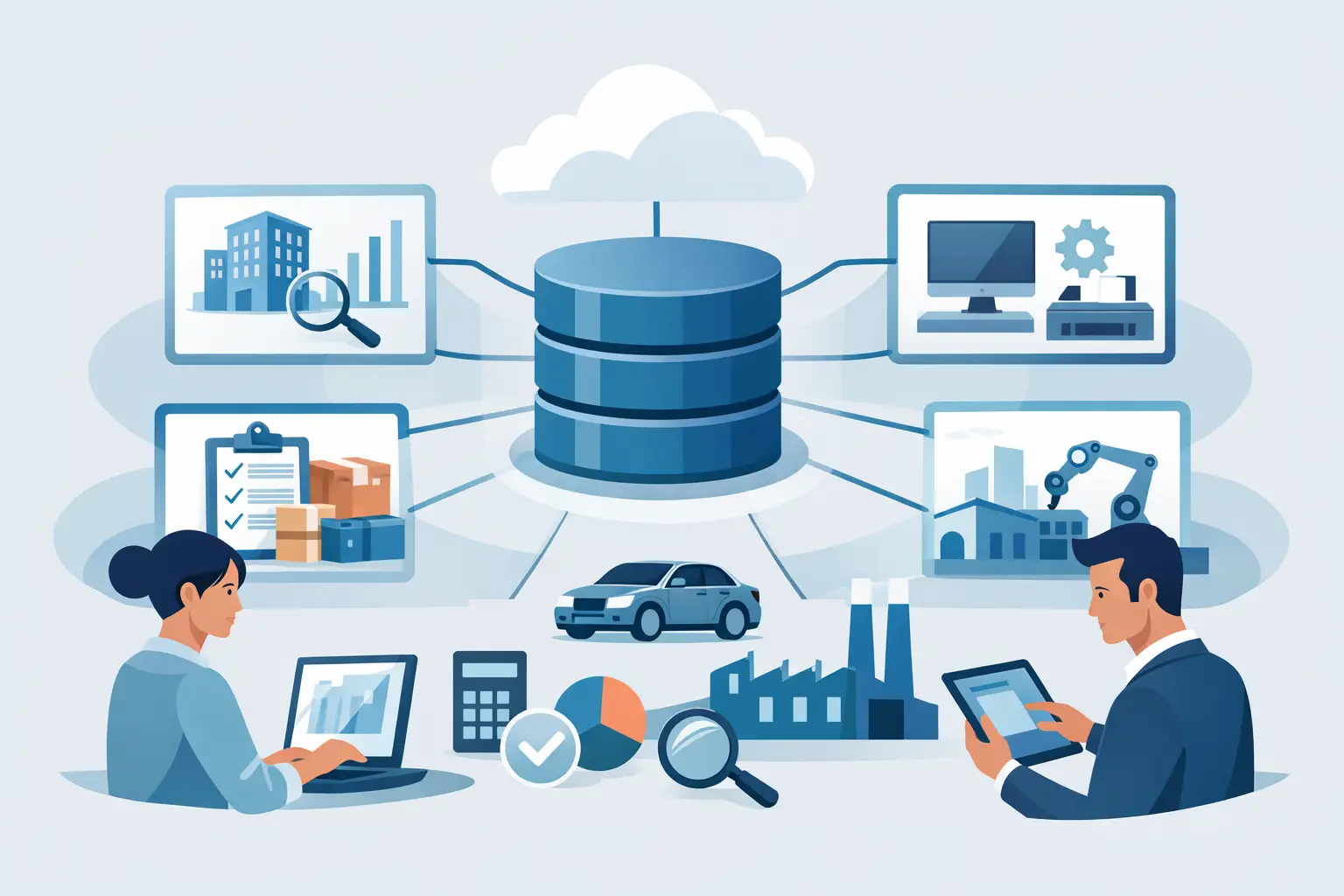
A central repository does not mean every department must work in the same way. It means everyone uses the same up-to-date file, with permissions defining who can read, approve, and change data. This model reduces duplication and allows you to track the history of operations without manually merging reports.
An entry like "Warsaw" is not useful when an organization has several buildings, floors, warehouses, and workstations. A location that is too general makes inventory, service, relocation, and accountability difficult. As a result, employees end up searching for assets physically, even though the information should be available instantly.
The location structure should reflect how the organization actually operates. Sometimes a branch and a room are enough. In other cases, you may also need a cost center, warehouse, department, or specific functional area. Excessive detail can be counterproductive if it makes updates difficult. The key is to align the level of data with the processes being supported.
Records do not update themselves just because a procedure exists. If it is unclear who is responsible for reporting a change, who approves it, and who monitors data completeness, the process will be bypassed under the pressure of daily tasks.
It is worth separating roles. A user can confirm receipt, a supervisor can approve a transfer, and the administrative or asset management department can maintain record quality. For specialized equipment, IT, technical departments, or service teams can take on additional roles. A clear division of responsibility shortens information flow and eliminates disputes over who was supposed to take the next step.
Manually rewriting numbers, checking off items on printouts, and later correcting data in spreadsheets is time-consuming. With a large number of assets, it also increases the risk of errors, omissions, and ambiguous descriptions. The problem is not the physical count itself, but the gap between physical verification and updating the register.
Barcodes or RFID allow for reading data without manual entry. Mobile inventory support enables teams to work directly on-site, flag discrepancies, and immediately route them for resolution. The result is not just a shorter inventory time, but, more importantly, faster recovery of reliable operational data.
An inventory discrepancy should not end with a "not found" comment. It could mean an incorrect location, a transfer without documentation, a disposal without updating the record, a labeling error, or the item being genuinely lost. Each of these causes requires a different response.
An effective process includes classifying discrepancies, assigning a person responsible for resolution, setting a deadline, and maintaining an audit trail of decisions. Only then does inventory stop being an annual chore and become a mechanism for improving data quality and asset control.
A simple equipment list does not answer management questions. How many computers are unassigned? Where is unused equipment accumulating? Which units report shortages most often? How long does it take to resolve discrepancies? Without such information, the organization reacts to incidents instead of managing resources proactively.
Reporting should combine operational and financial perspectives. Administration needs information on locations and users, finance on value and accountability, and procurement on the actual availability of resources. Shared data helps reduce purchases made solely due to a lack of visibility into existing equipment.
The starting point is organizing master data. The organization should define which equipment categories are tracked, which fields are mandatory, and when an item receives an identifier. Next, you need to describe the events that change its status: receipt, issuance, transfer, service, return, inventory, and disposal.
The next step is automating the workflow. Reminders for unconfirmed issuances, validation of required fields, electronic protocols, and logging change history reduce reliance on employee memory. A system will not replace accountability, but it can effectively enforce process completeness and highlight exceptions before they become costly problems.
It is also worth measuring record quality. Practical metrics include the percentage of items with an assigned user and precise location, the number of open inventory discrepancies, the time taken to resolve them, and the share of unused equipment. This data shows whether the organization is truly regaining control or merely digitizing existing chaos.
Platforms like EXINO combine centralized records, labeling, mobile inventory management, and change tracking in a single environment. However, technology only delivers results when implemented alongside clear methodology, roles, and operational rules. The best system cannot fix a process that no one follows.
Well-managed equipment records are not just a register for the sake of compliance. They provide real-time information that allows you to issue equipment faster, avoid unnecessary purchases, conduct inventory efficiently, and defend your decisions during an audit. This visibility is where real control over asset costs begins.

















.webp)