Łukasz Sagun
2026-03-25
•
6
min
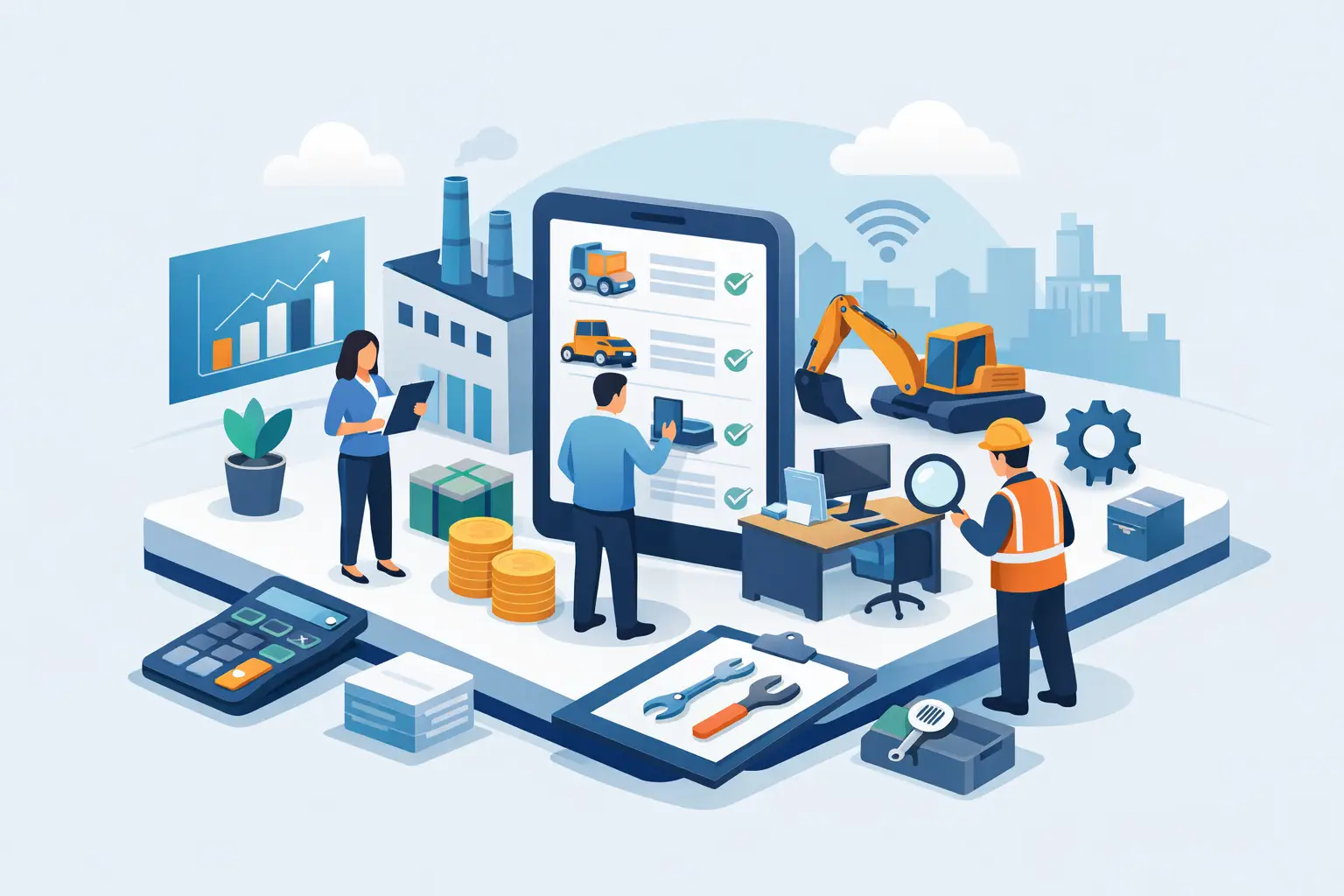
Not knowing where equipment is located, who is using it, or what condition it is in quickly becomes a cost. Organizations end up purchasing devices they already own, wasting time resolving inventory discrepancies, and making decisions based on incomplete data. A fixed asset management platform organizes this area, creating a single source of truth for administration, finance, operations, and asset managers.
It is not just about replacing a spreadsheet with a more complex database. A well-implemented platform changes how assets are handled: it links records with actual locations, usage history, documents, deadlines, and processes for handover, maintenance, and disposal. The result is greater operational control and less manual work.
In many organizations, fixed asset data exists but is scattered. The finance department maintains accounting records, administration has its own equipment list, and site managers keep information about equipment in emails or local files. Each of these sources may be correct in its own right. The problem begins when you need to get a single, up-to-date answer.
Is the device available? Has it been handed over to an employee, moved to another facility, or sent for service? Does the item require an inspection? Is its condition suitable for further use? Without a consistent register, these questions require phone calls, coordination, and manual verification.
The scale of the problem grows with the number of locations, users, and asset categories. In a company with one office, a simple register might work well enough. In an organization with branches, warehouses, medical facilities, mobile equipment, or high equipment turnover, such a model quickly becomes unmanageable. Data duplicates, outdated locations, and items whose status no one can confirm start to appear.
A fixed asset management platform should combine accounting and operational data without blurring the lines between them. Initial value, depreciation, and classification are essential for finance. Location, responsible person, technical condition, serial number, repair history, and documentation are critical for the daily work of administration and operations. Only by combining both perspectives can you get a complete picture of your assets.
A central repository allows you to assign a unique identity to every item. Marking assets with barcodes, QR codes, or RFID technology speeds up field identification and reduces the risk of error. An employee conducting an inventory does not have to rely on descriptions or manual number comparisons—they scan the tag, and the system records the result along with the location, date, and verification status.
In practice, the value of the platform also becomes apparent between inventories. When an item changes location, user, or status, the change should be registered as part of the standard workflow, rather than only after a discrepancy is detected. This shifts the organization from a model of periodic "asset hunting" to ongoing lifecycle management.
A catalog of items alone is not enough. A useful platform should show dependencies: which devices are underutilized, which locations report the highest demand, where failures recur, and what equipment is available for redeployment instead of purchase.
This visibility changes the conversation about costs. Before placing an order, you can verify whether the organization already has an asset with the required specifications. Before replacing equipment, you can check its service history and actual usage. Before closing a project, you can organize the recovery of equipment instead of letting it get lost within the organizational structure.
The most time-consuming aspects of asset management are usually repetitive tasks: updating records, preparing inventory sheets, sending deadline reminders, resolving discrepancies, and compiling documentation. Automation does not eliminate human responsibility, but it removes tasks that do not require expert judgment.
Examples include notifications about upcoming inspections, warranty expirations, inventory deadlines, or unconfirmed handovers. Equally important are predefined workflows for receipt, location changes, employee issuance, returns, repairs, and disposal. Every operation leaves a trail, making it easier to reconstruct an item's history and identify the person responsible for the next stage.
Automation, however, should reflect actual procedures. An overly rigid process can lead to system workarounds, especially when an organization manages mobile assets or handles situations requiring a rapid response. Therefore, before configuration, it is essential to determine which steps require approval and which can be simplified without losing control.
For many departments, inventory still means a period of increased workload, involving employees from various locations and weeks of reconciliation. A platform will not make the obligation to verify the physical state of assets disappear. It can, however, significantly shorten the preparation, execution, and settlement of the process.
The starting point is an up-to-date asset database and a clearly defined scope of the audit. Those performing the inventory should receive access to lists assigned to their specific location or area of responsibility, rather than the entire organizational resource. Mobile scanning of labels reduces manual data entry and allows for immediate tagging of items as found, missing, damaged, or requiring clarification.
The greatest benefit appears after the audit is complete. The system can compare registry data with scan results, highlight discrepancies, and route them for clarification according to an established workflow. The team does not waste time manually merging files from multiple locations. They focus on the items that actually require a decision.
Statutory requirements, internal policies, audits, and industry procedures demand reliable data and the ability to demonstrate how the process was conducted. Therefore, the platform should ensure access control, change history, operational traceability, and reporting tailored to user roles.
This is particularly important in entities with high procedural requirements, including healthcare, where equipment is dispersed, heavily used, and often subject to additional service requirements. In such conditions, a lack of current information is not just an administrative problem. It can affect operational continuity, safety, and the ability to demonstrate compliance with procedures.
It is best to start system implementation with a process diagnosis, not data import. You need to determine which asset categories the project covers, who owns specific data, how transfers are handled, and where the most frequent discrepancies arise. Without these findings, even the best-configured technology will simply be a new place to store disorganized information.
The next stage is cleaning and standardizing data. It is not always necessary to strive for the immediate completion of every historical detail. It is often more effective to define the minimum scope of data necessary to launch control, and then gradually improve the quality of the register during inventory, service, and transfers.
When choosing a solution, it is worth evaluating more than just a list of features. Key factors include the ability to map your own processes, integration with financial and accounting systems, ease of use across multiple locations, support for mobile identification, and the quality of implementation support. Technology should deliver operational results, not force a costly adaptation of the organization to a tool's template.
EXINO combines a digital platform with the eMajątek 4.0 methodology, which allows you to treat implementation as a project to organize the entire area of asset management. This is crucial where the problem is not limited to the lack of a system, but also includes inconsistent responsibilities, fragmented procedures, and limited data quality.
The best time to improve fixed asset management is not the week before inventory. It is the moment an organization realizes that another purchase is the result of a lack of information, not a real lack of equipment. A platform provides the basis for data-driven action, but a lasting effect is only ensured by consistently integrating it into daily processes of asset transfer, usage, service, and accounting.













.webp)