Łukasz Sagun
2026-03-25
•
6
min

In many organizations, the decision to purchase new equipment is made simply because no one can quickly confirm the location of assets already in their possession. Case study on reducing procurement costsshows that the problem rarely starts in the purchasing department. Most often, its source lies in fragmented asset data, outdated records, and the lack of a simple process for verifying equipment availability before placing an order.
The following example is a model scenario, but it reflects situations encountered in medium and large organizations operating across multiple locations. It demonstrates how organizing data on fixed assets and equipment can reduce procurement without compromising operational quality.
An organization with approximately 1,200 employees managed offices, warehouses, and field sites across nine locations. Their records included computers, monitors, phones, furniture, specialized devices, and auxiliary equipment. Some data was maintained in the financial system, some in spreadsheets, and information about the current user of the equipment often remained in email correspondence or the personal knowledge of specific employees.
The administration department regularly received requests for laptops, monitors, and workstation equipment. In many cases, the request was business-justified: a new person was joining the team, a department was relocating, or equipment needed replacement. The problem was that before approving a purchase, there was no unified way to answer the basic question: does the organization already possess an item with the appropriate specifications that can be transferred, issued, or prepared for reuse?
As a result, orders were fulfilled correctly from the perspective of an individual request, but not always rationally from the perspective of the entire organization. Equipment left behind by a departing employee might remain in a local administrator's closet. Monitors ended up in storage without a status update. Furniture intended for relocation was invisible to other offices. The cost was incurred not only on the purchase invoice but also in the time spent searching, coordinating, and subsequently cleaning up records.
The goal of the project was not to halt purchases or impose additional bureaucracy on users. The organization wanted to regain control over its assets and make purchasing decisions based on up-to-date data. A simple rule was adopted: any new purchase should be preceded by a check of available resources, provided the nature of the requirement allows for it.
The scope covered three areas. The first was the centralization of asset information: inventory number, category, location, user, technical condition, and availability status. The second was streamlining the equipment lifecycle—from receipt, through issuance and transfer, to return, service, or disposal. The third was integrating data on available resources into the procurement request process.
In practice, implementation began with verifying existing data. It was not enough to simply move records from spreadsheets into a single system. It was necessary to remove duplicates, standardize category names, define data owners, and separate active components from those that had been retired. For an organization with distributed assets, this stage requires cooperation between administration, finance, IT, and those responsible for specific locations.
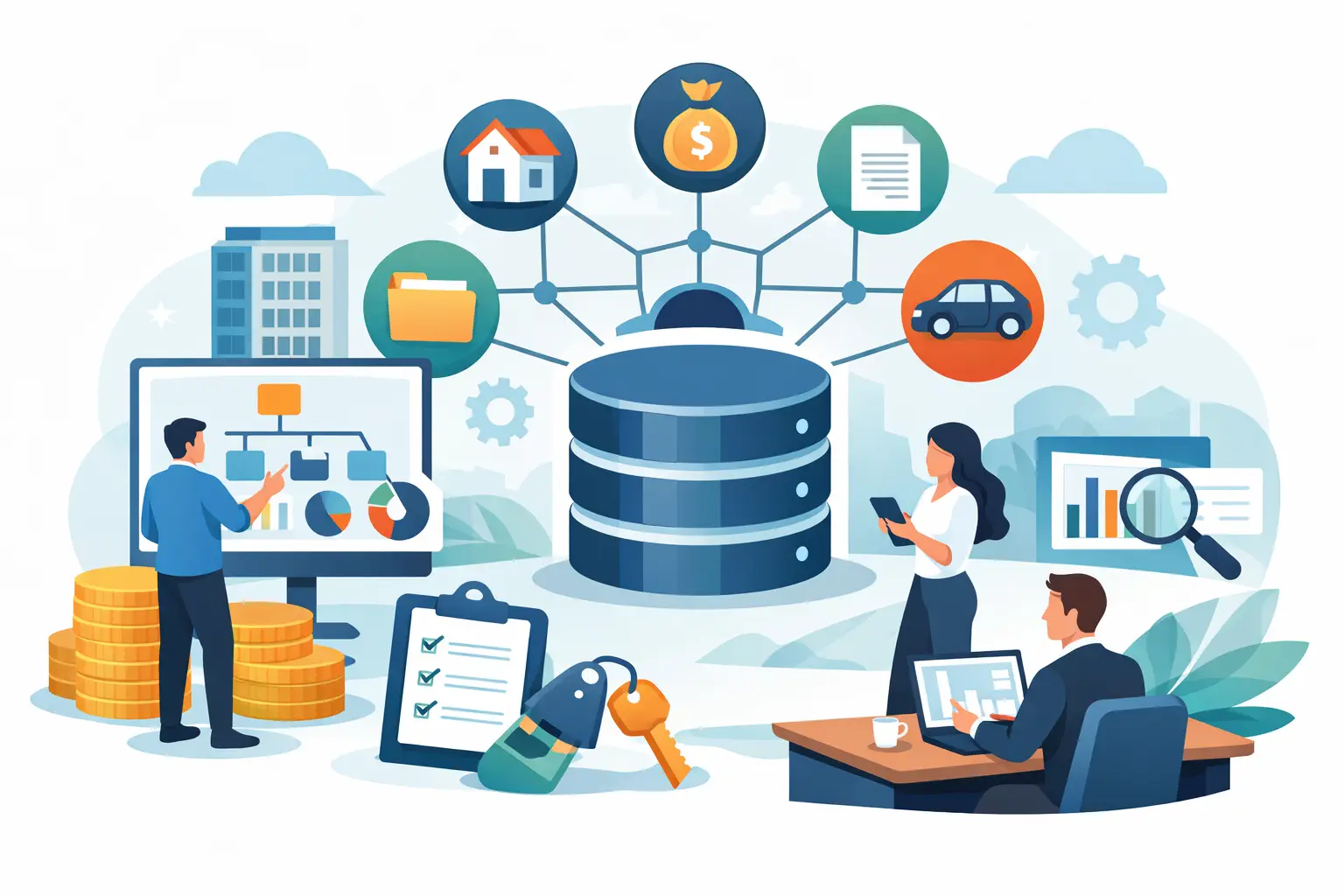
After organizing the data, the organization implemented a central asset repository with the ability to quickly search for resources by location, category, status, and specifications. Each item received identification that allowed linking record data with its actual place of use. Inventory and updates ceased to be a one-time activity performed solely before the closing of the accounting period.
The biggest change concerned the moment preceding a purchase. When a request for standard equipment or supplies was submitted, the person handling the request would first check the pool of available resources. If a usable component was located at another site, the cost and time required for transfer, preparation, and any necessary servicing were evaluated. Only by comparing these figures with the cost of a new purchase could a well-founded decision be made.
This is an important distinction. Reusing an asset is not automatically the best solution. Transporting equipment between branches, repairs, lack of warranty, or technical specifications that don't meet workstation requirements can make purchasing new equipment more rational. Asset control is not about blocking spending at all costs. It is about ensuring that spending is informed, comparable, and defensible based on data.
Statuses were also introduced to eliminate ambiguity. An asset could be assigned to a user, available for issue, in service, pending relocation, awaiting a decision, or retired from use. As a result, the purchasing department no longer had to ask several people whether a given laptop or monitor was actually free. The information was available in one place, along with a history of changes and assigned responsibility.
After a few months, the organization compared the number and value of purchases in the categories covered by the new process with a corresponding previous period. The most visible effect occurred in standard office and IT equipment, where the potential for using existing resources was greatest. Some planned orders were replaced by issuing equipment from the available pool, while others were limited after surpluses were identified at field locations.
In a model scenario, the value of avoided purchases amounted to 18% of the budget allocated for selected equipment categories. However, this value should not be treated as a universal indicator. The scale of savings depends on employee turnover, the degree of location dispersion, the quality of initial data, the structure of assets, and whether the organization previously maintained regular records. In entities with a large number of mobile devices, the potential may be higher. In organizations that already have a well-managed warehouse and strict purchasing procedures, the financial impact may be smaller, but still operationally significant.
The benefits were not limited to the purchasing budget. Administration reduced the time needed to determine resource availability. Finance received more reliable data for controlling fixed assets. Location managers gained clarity on which equipment they were responsible for. In turn, those conducting inventory worked with up-to-date information instead of reconstructing an asset's history at the end of the year.
A one-time cleanup of records may reveal stock and bring quick results, but it will not ensure lasting cost reduction. If, after implementation, employees continue to transfer equipment without registration and statuses are not updated, the database quickly loses credibility. Then, the organization returns to making purchases based on assumptions.
That is why three elements are key: a single source of data, clearly assigned responsibilities, and a simple process for updating information with every asset movement. Technology is important here because it automates reminders, records the history of operations, and makes data available to the right people. Equally important is the implementation methodology: classification rules, circulation procedures, and an agreement on who confirms changes to the location, user, or status of an asset, and when.
The EXINO platform can support this model by combining record-keeping, monitoring, inventory, and asset utilization control in one environment. Its value stems not only from a digital register but from the ability to translate operational data into decisions regarding purchases, relocations, and the continued use of equipment.
The best time to verify asset availability is not when an invoice is submitted for approval. It is during the needs planning stage. An organization that knows the structure of its resources, their condition, location, and lifecycle can anticipate replacements earlier, group requirements, and limit emergency purchases.
It is worth starting with one category of assets with high turnover and repetitive purchases, such as laptops, monitors, or workstation equipment. Once reliable data is built, it is easier to extend the model to other groups of assets. The most important thing is not just finding savings in one period, but creating a process where every purchasing decision has the full context of the resources already owned by the organization.