Łukasz Sagun
2026-03-25
•
5
min

The problem usually doesn't start with a lack of fixed assets, but with the lack of a reliable answer to a simple question: where is a given item, who is using it, and is it still needed? When assets are scattered across branches, departments, and employees, a spreadsheet quickly stops being enough. Fixed assets then become a source of costs, record-keeping risks, and unnecessary purchases.
Well-organized asset management is not just about correctly entering an item into a register. It should ensure ongoing control over the entire asset lifecycle—from purchase and receipt, through usage, transfers, and maintenance, to disposal or sale. It is precisely at the intersection of these processes that organizations regain time, reduce errors, and make better purchasing decisions.
Operationally, a fixed asset is a tangible asset used by an entity for more than a year. This can include buildings, technical equipment, machinery, vehicles, medical devices, IT infrastructure, or specialized production equipment. The condition is that it must be complete, fit for use, and intended for the organization's needs.
It is worth distinguishing between the balance sheet and tax perspectives. Accounting regulations do not reduce the definition of a fixed asset to a single value limit. In income tax, however, the 10,000 PLN threshold is significant for how expenses and depreciation are settled. In practice, a company should have its own clearly defined policy for classifying assets, consistent with accounting principles, internal control needs, and applicable regulations.
This distinction has real-world implications. The same type of equipment might be considered low-value equipment in one organization, while in another, it might be an item requiring special oversight due to data, security, accreditation requirements, or maintenance costs. Therefore, record-keeping should not be limited to an inventory number and initial value.
An asset register that serves only accounting purposes does not support effective operational management. Administration needs information about the location and the person responsible. The technical department must see maintenance schedules, warranties, and repair history. Finance expects accurate data on value, depreciation, and source documents. Department heads, meanwhile, want to know if an asset available in another department can be used before making a new purchase.
If each piece of this information exists in a separate file, email inbox, or local register, the organization loses a single version of the truth. The result is duplicate purchases, outdated assignments, long explanations of inventory discrepancies, and a higher risk of errors during audits.
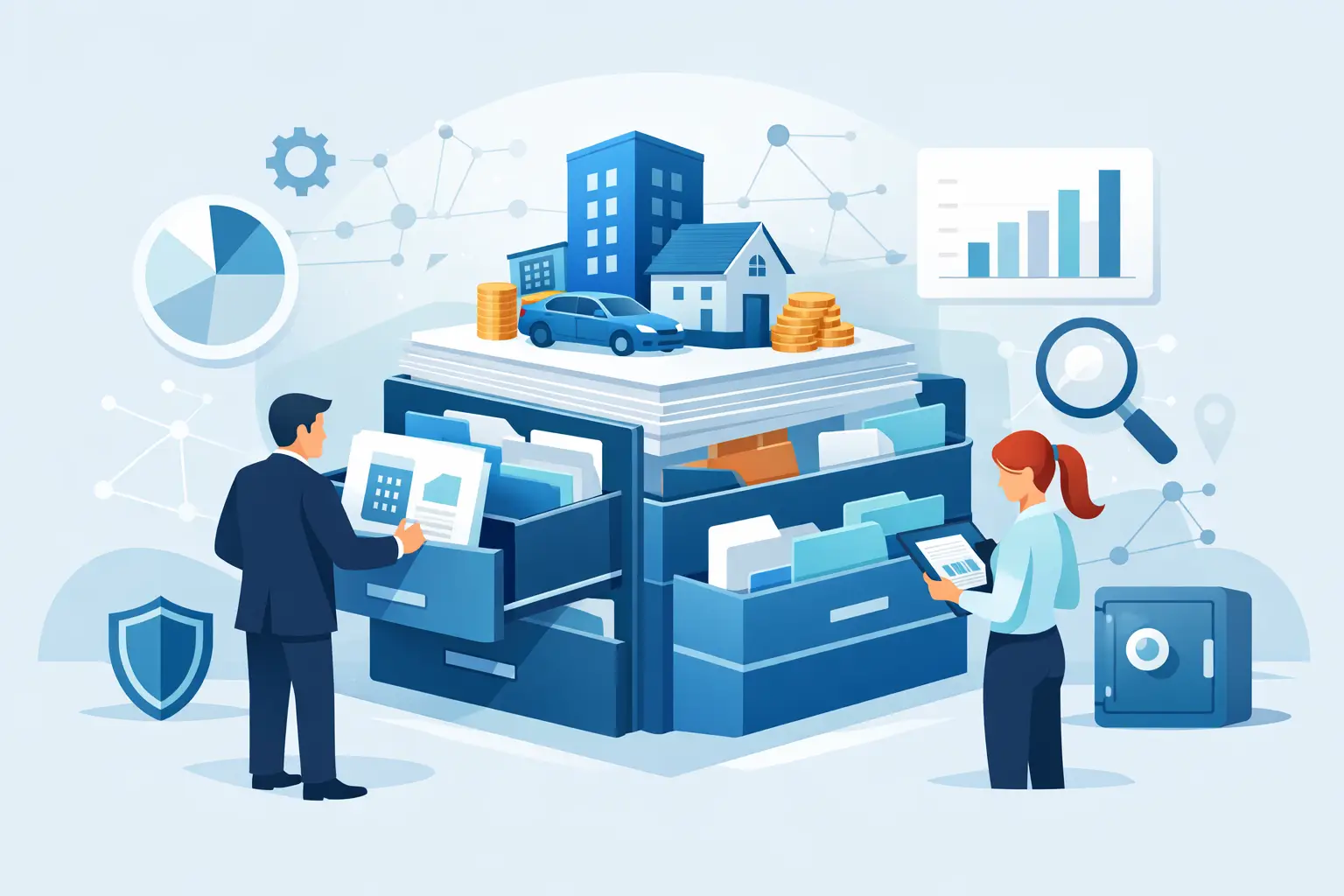
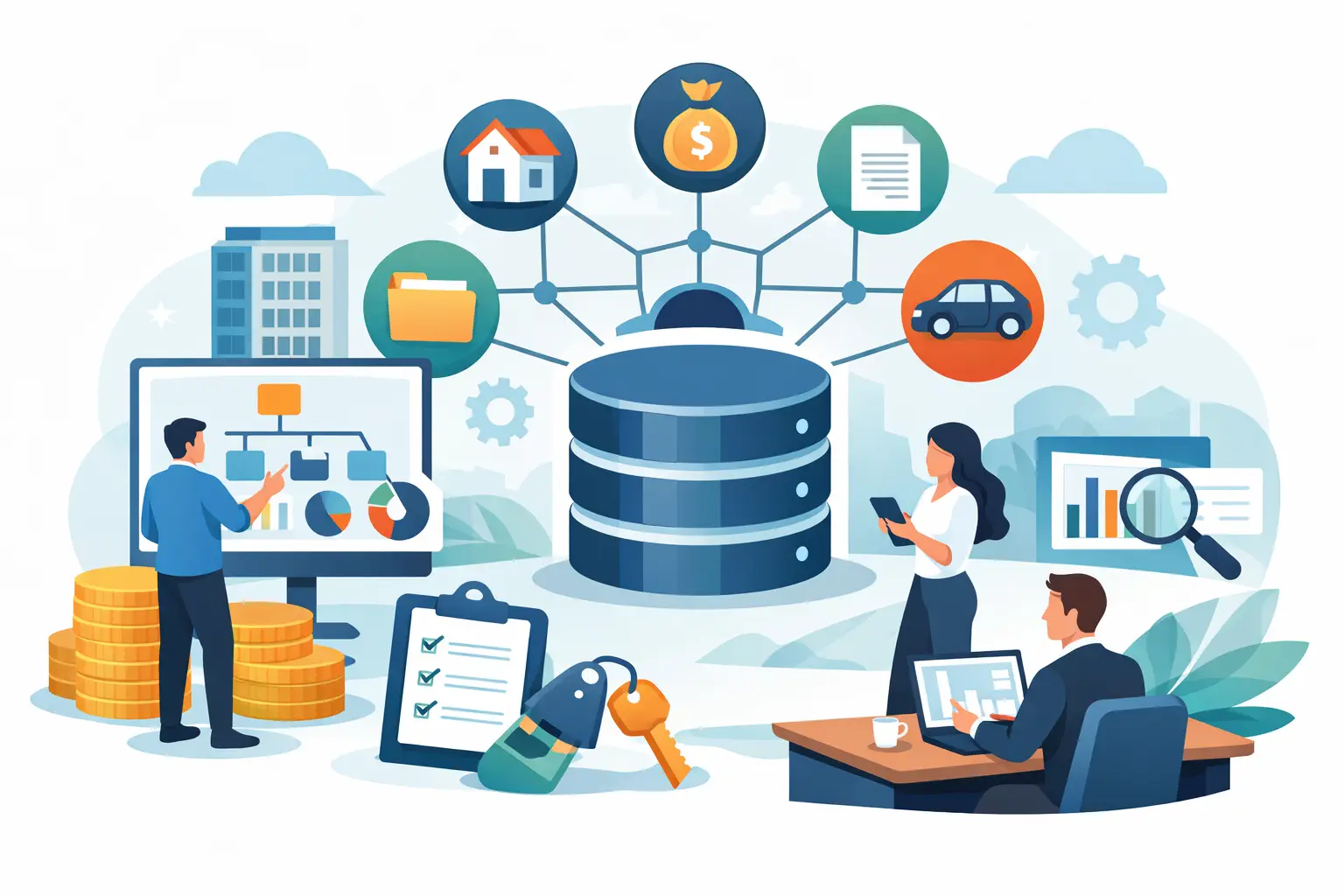
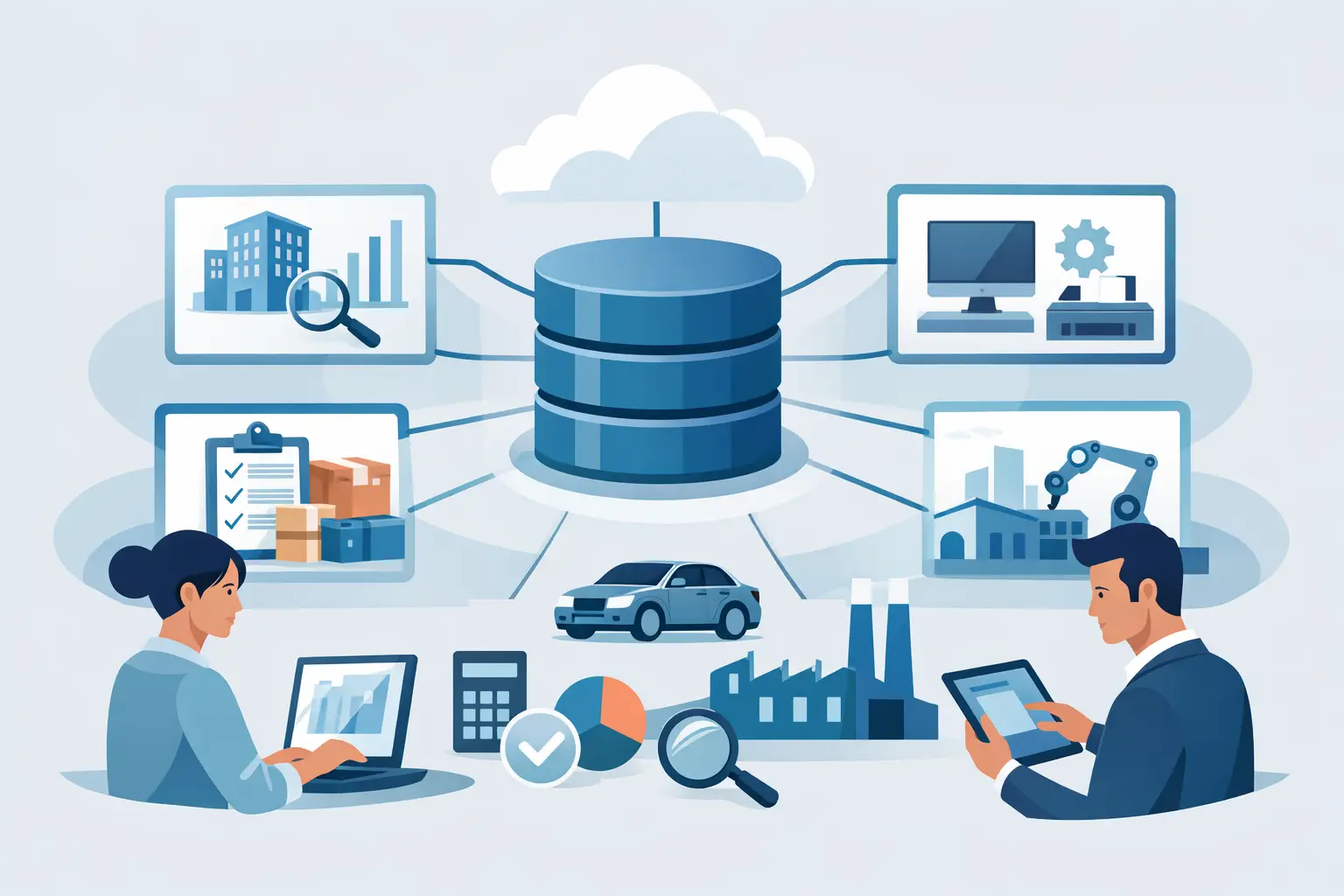
A central data repository changes this model. Each item receives a complete record: registration data, identification, location, cost center, user, documents, photos, status, and event history. As a result, a transfer between locations is not an informal piece of information passed between employees, but a documented change in the process.
The greatest value comes from combining record-keeping with daily asset management. In practice, this means designing a simple but consistently implemented process.
At the time of purchase, it is worth assigning the item to the correct category, location, responsible person, and funding source. At this stage, the organization should also determine what data will be required later: serial number, purchase document, warranty expiration date, maintenance schedule, or terms of use.
Errors made during receipt multiply at later stages. A missing serial number makes it difficult to identify the device. An imprecise location makes inventory taking longer. A lack of assigned responsibility means that when the place of use changes, no one updates the data.
In multi-branch organizations, assets are constantly changing locations: a laptop goes to a new employee, equipment is transferred to another facility, a device returns from service, and furniture is moved between rooms. If updates only happen during the annual inventory, the register does not reflect reality for most of the year.
A good practice is to have transfers recorded directly by the people involved in the process, with approval where required by organizational policy. Automatic logging of the date, user, and change history strengthens accountability without creating additional administrative work.
Some fixed assets require periodic inspections, certifications, calibrations, or maintenance. Missing a deadline can mean not only a breakdown but also operational downtime, safety risks, or non-compliance with industry procedures.
System reminders allow you to plan activities before deadlines. The organization gains a schedule, a history of completed work, and the ability to assess whether continued maintenance of a device is economically justified. Repairing is not always the right decision. Data on failure frequency and service costs help compare maintenance costs with replacement costs.
An asset that is no longer physically present in the organization should not remain an active item in the records. Disposal, sale, donation, theft, or wear and tear require a documented process and updates to financial and operational data. This is a stage that is often postponed, causing registers to contain assets that exist on paper but not in reality.
Inventory reveals the quality of data, but it cannot replace ongoing updates. If transfers have taken place outside the system for many months, even the best-prepared team will be forced to search for assets, explain discrepancies, and reconstruct the history of events under deadline pressure.
Labeling with barcodes or RFID speeds up identification and reduces the risk of errors. However, labeling alone does not solve the problem if it is not linked to an up-to-date asset card and a procedure for resolving discrepancies. Technology should shorten the time from identifying a discrepancy to resolving it and approving the correction.
In large-scale entities, continuous or phased inventory works particularly well. Instead of involving the entire organization in a single period, you can control specific locations and asset groups according to a schedule based on risk levels. The scope of the solution depends on regulations, accounting policies, and the nature of the assets, but the goal remains the same: to keep the register consistent with reality.
The first step is not choosing technology, but organizing master data. You must establish uniform asset categories, a standard for location descriptions, rules for assigning numbers, and roles responsible for updating information. Without these decisions, even an extensive system will simply replicate previous chaos in a new environment.
Next, it is worth defining metrics that will show the impact of the implementation. These could include the time required for inventory, the number of unexplained discrepancies, the percentage of assets with an assigned user, the number of purchases preceded by a verification of available resources, or the cost of handling a single request. Metrics should be useful for finance and operations, not just for the administrative team.
The next stage is the automation of repetitive tasks: deadline reminders, document generation, approval workflows, and reporting. The EXINO platform, supported by the eMajątek 4.0 methodology, combines these areas into a single work environment, allowing registry data to support daily decisions regarding asset utilization.
Implementation should also take process users into account. The best procedure will not yield results if updating data is complicated for a field worker, a location manager, or an inventory clerk. It is worth starting with the area where the problem is most acute, testing the operating model, and only then expanding it to other units.
Asset control is not a project conducted once every few years. It is an organization's ability to provide a quick, reliable answer to questions about the status, location, cost, and utilization of every significant asset. When this information is available without having to search through multiple sources, purchasing decisions become more rational, and team workflows become significantly simpler.