Łukasz Sagun
2026-03-25
•
5
min

In an organization with thousands of assets, the problem is rarely a lack of data. Much more often, data is scattered across spreadsheets, the finance department, administration, local records, and the knowledge of individual employees. A well-conducted asset management system review helps determine whether a tool will organize this chaos or simply move it into a new application.
For medium and large organizations, an asset management systemis no longer just a fixed asset register. It should support daily control over equipment, devices, locations, responsible personnel, and the lifecycle of every item. The business impact is tangible: fewer unnecessary purchases, faster inventory counts, fewer recording errors, and better audit readiness.
Comparing systems based on a list of features can lead to the wrong decision. Two platforms might offer QR codes, reports, and asset records, but differ in how they handle real-world processes. It is worth starting by answering the question of where the organization is currently losing time, money, or control.
If the problem is constant equipment purchasing despite similar devices being available in other locations, the priority will be up-to-date information on availability and usage location. When the biggest burden is the annual inventory, mobile scanning, label support, and discrepancy resolution mechanisms become key. In entities with high procedural requirements, the history of changes, permissions, and the ability to document process compliance are equally important.
A system should be evaluated through the lens of the entire asset lifecycle: from receiving an item, through assignment to a user and location changes, to maintenance, disposal, or sale. A register that describes the state well on the day of implementation but fails to keep data current during daily operations quickly ceases to be a reliable source of information.
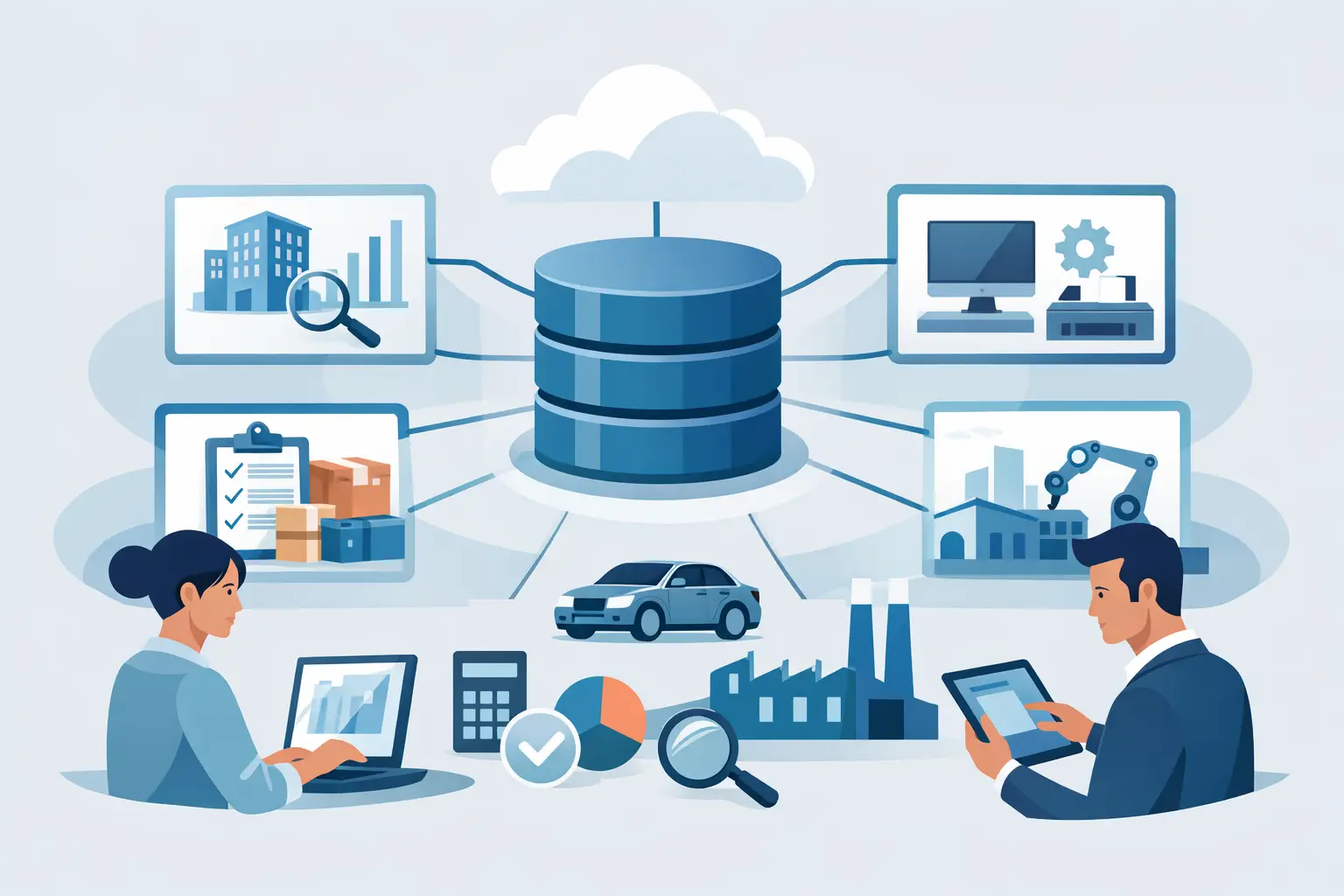
The first criterion is a single source of asset data. The system should store not only the inventory number and value in the record, but also the category, status, location, responsible person, documents, operation history, and information needed for accounting and audits.
Centralization is particularly important in multi-branch organizations. Without it, administration sees only a fragment of the resources, while individual units build their own registers. This leads to differences in naming, duplicate entries, and disputes over which information is current. An asset management platform should eliminate such situations through uniform recording rules, user roles, and consistent data dictionaries.
Not every organization needs the same level of detail. For some equipment, bulk recording is sufficient, while medical apparatus, IT hardware, machinery, or devices under warranty require an extensive history and precise assignment. A good system allows you to match the data model to the asset category without forcing users to fill in fields that have no operational value.
Even the best tool will not automatically improve input data. Before implementation, you need to assess how many records contain gaps, duplicates, or outdated locations. In practice, cleaning up the database is part of the project, not a task that can be put off until later.
It is also worth checking whether the system allows for data completeness checks and inconsistency detection. Without these mechanisms, errors return with every subsequent receipt, transfer, and change of responsibility.
Inventory most accurately shows whether a tool supports operations. A process conducted on paper or in multiple spreadsheets requires manual transcription of results, reconciliation of differences, and repeated contact with locations. This generates costs, delays, and the risk of errors.
A modern system should enable conducting an inventory using mobile devices and identifiers such as barcodes, QR codes, or RFID. The choice of technology depends on the scale and nature of the assets. QR codes are often sufficient for office equipment and provide a low-cost labeling solution. RFID can speed up work when dealing with a large number of items, but it requires higher investment and an assessment of the technical conditions within the facilities.
Scanning alone is not enough. What matters is handling exceptions: items not found, items discovered that are not in the records, incorrect locations, or transfers to another user. The system should guide the person performing the inventory through these situations, record decisions, and create material for reconciling discrepancies. This turns inventory into a control process rather than a one-time checklist.
The value of a system grows when it provides reminders before events become problems. These can include maintenance deadlines, expiring warranties, scheduled inventories, missing transfer confirmations, or the need for data updates. Automated notifications reduce reliance on individual memory and allow for better team workload planning.
Handling document workflows and approvals is also essential. Transferring a laptop, moving a device between departments, or reporting a disposal should leave a trail in the system. In regulated organizations, this is not just a convenience, but a way to demonstrate who made a decision and on what basis.
However, automation does not mean that every process should be as complex as possible. Too many approval stages discourage users and encourage bypassing rules outside the system. Implementation should maintain a balance between control and operational speed.
Reports are only useful if they answer specific operational questions. The board or CFO needs a view of the value and structure of assets. Administration wants to know which items are available, where shortages exist, and which actions are overdue. Operational departments should receive information about resources assigned to their locations or teams.
When evaluating a solution, it is worth checking whether reports can be filtered by location, category, status, responsible person, and time period. Equally important is the ability to quickly drill down from a summary result to a specific record. A report indicating excess equipment is just a starting point. Only data on its condition, availability, and location enables the reduction of new purchases.
A mature approach also includes measuring key performance indicators: inventory time, number of discrepancies, value of unconfirmed assets, number of transfers, and the share of items without an assigned custodian. Such data shows whether the process is actually improving.
An asset management system should not function in isolation. Integration with a financial and accounting system reduces the number of manual reconciliations between operational records and accounting records. Connecting with procurement, HR, or service systems can further accelerate intake, assignments, and change management.
The scope of integration should be tailored to specific needs. A project that is too broad at the start extends implementation time and increases risk. It is often more sensible to first launch a reliable central registry and inventory process, and then develop automated data exchange.
When evaluating a platform, verify the permission model, audit logs, backups, and the ability to assign access to organizational units. Asset data may include operationally sensitive information, so security cannot be an afterthought in the project.
Purchasing a license does not automatically mean improved control. The return appears when the organization establishes process owners, labeling rules, responsibility for data accuracy, and procedures for responding to discrepancies. Training tailored to specific roles is also necessary—the person performing the inventory, the administrator, and the manager approving decisions all work differently.
That is why it is worth choosing a partner who combines technology with implementation experience. In the EXINO approach, the system, the eMajątek 4.0 methodology, and project support are intended to organize processes, not just launch another database.
The best way to start is with a pilot program in a selected location or asset category. This allows you to verify data quality, workflow ergonomics, and actual inventory time without the risk of paralyzing the entire organization. The results of the pilot should then determine the pace of the subsequent rollout.
A well-chosen system won't replace accountability for assets, but it will make that accountability visible, measurable, and enforceable. This is what creates the foundation for lasting savings and operational control.