Łukasz Sagun
2026-03-25
•
7
min

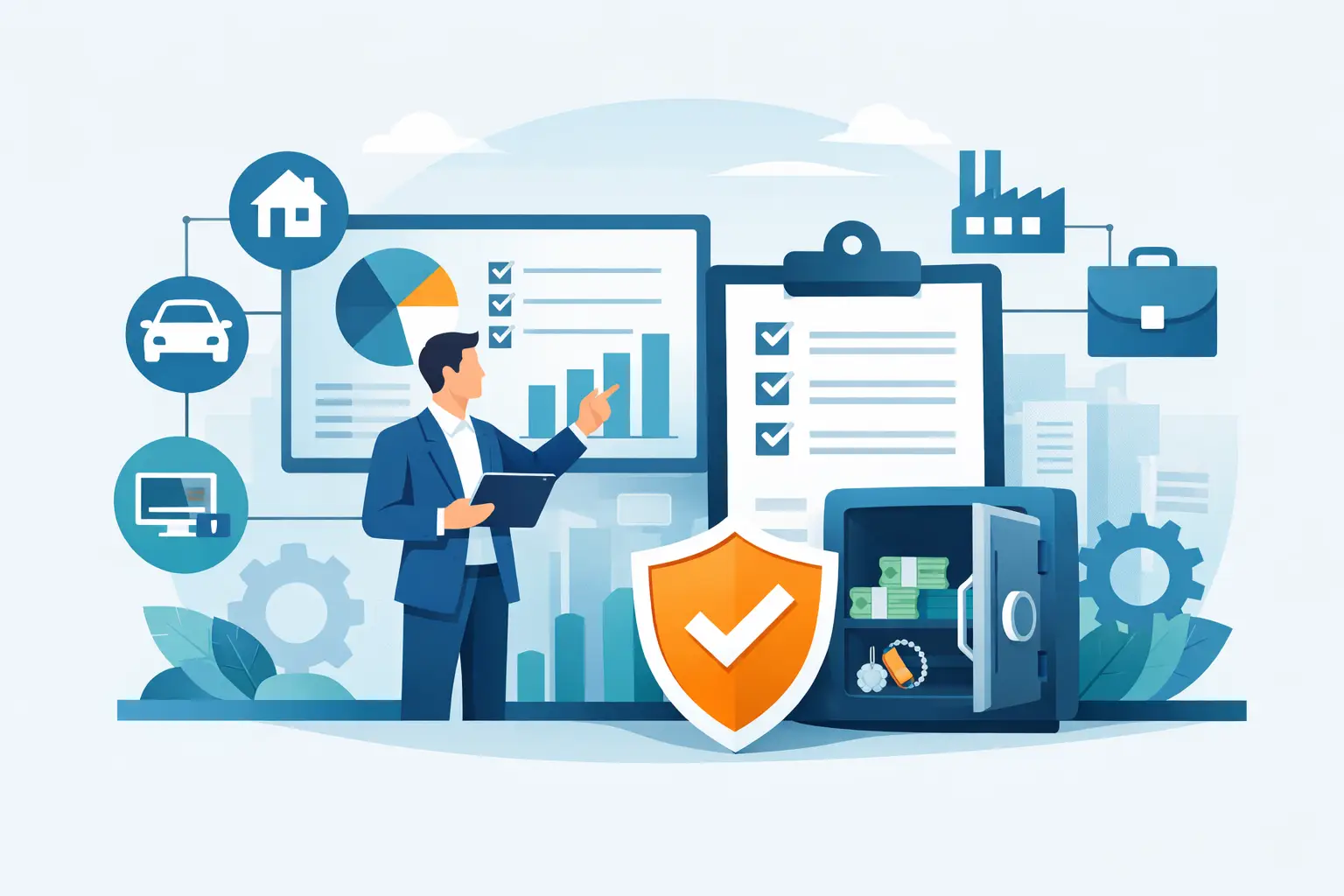
In a multi-site organization, a single untracked laptop, pump, medical device, or piece of equipment is not a minor issue. It becomes a source of unnecessary purchases, disputes over responsibility, and unreliable data. Asset management is designed to prevent exactly this: to create a complete, up-to-date, and operationally useful picture of assets—from acquisition to retirement.
For administration, finance, and operations, this is not just a matter of proper record-keeping. A well-managed process allows for fact-based decision-making: what the organization owns, where a given item is located, who is using it, what its condition is, and whether purchasing another unit is actually necessary. This directly impacts costs, team productivity, and compliance with both internal requirements and statutory regulations.
The biggest problem is usually not a lack of data, but its fragmentation. Some information is in the financial and accounting system, some in administrative spreadsheets, and the rest in paper documents, emails, or the specific knowledge of individual employees. In such a situation, the same item can have different descriptions, numbers, locations, and responsible parties.
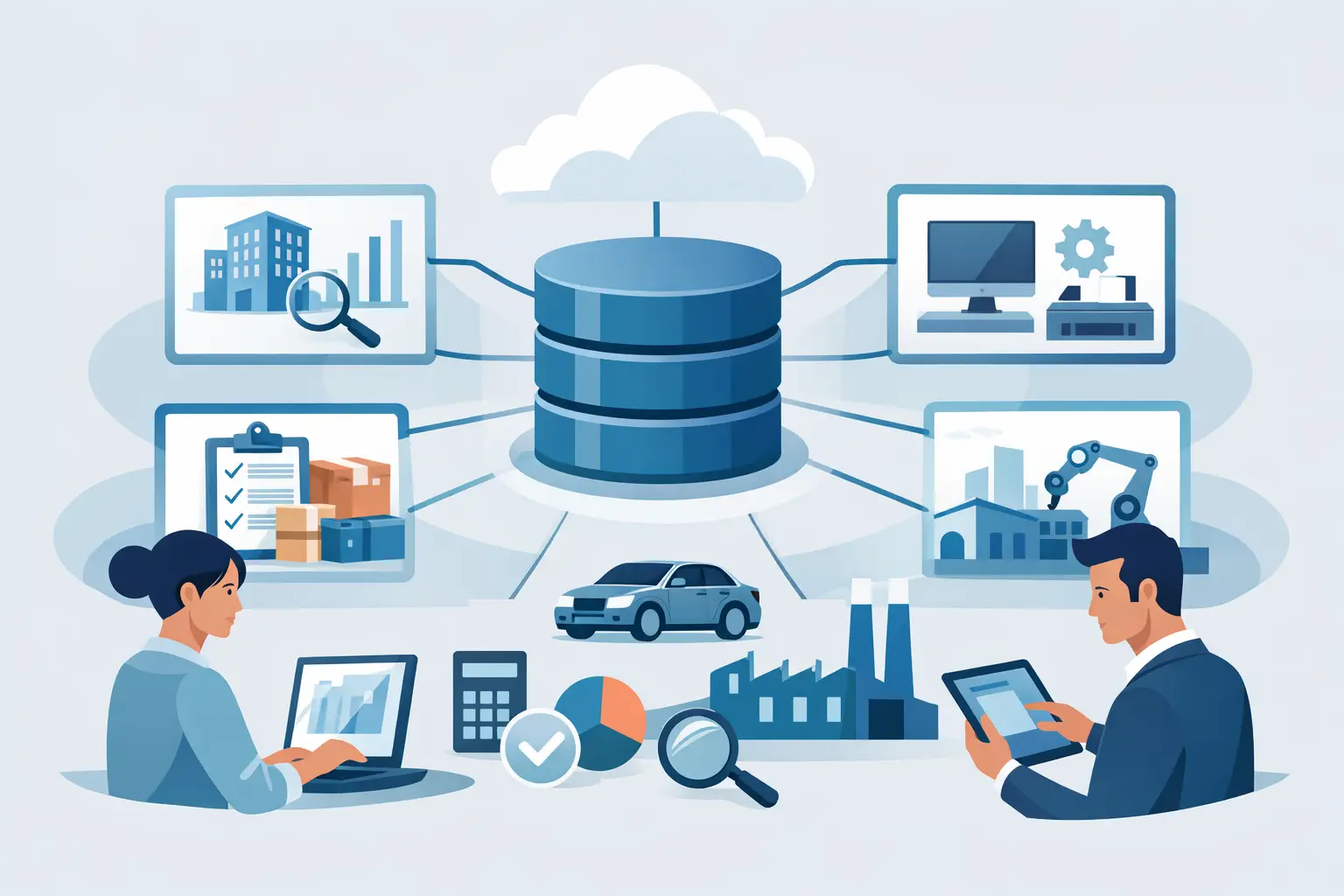
A central data repository organizes this chaos. Every asset should have a unique identity and a set of information tailored to its type and importance to the organization. In practice, this includes an inventory number, category, value, acquisition date, location, user, status, documents, and change history.
However, the key is not the database itself, but the quality of the update process. If moving a device between branches requires a series of emails and manual corrections in several files, the data quickly stops reflecting reality. The system should record changes where they actually occur and provide up-to-date information to authorized personnel without the need for cross-departmental reconciliation.
Finance needs information on value, depreciation, and source documents. Administration needs to know where equipment is located and who checked it out. The technical or infrastructure department focuses on the device's condition, maintenance, and service schedules. Each of these perspectives is valid, but they should not lead to the creation of independent registers.
Mature asset management combines these needs into a single data model. This does not mean that every user sees all the information. Roles and permissions allow for controlled access while eliminating the need for redundant data entry. The result is simple: fewer errors, shorter processing times, and easier identification of process owners.
Organizations often treat record-keeping as a periodic accounting obligation. This approach meets the formal minimum but does not answer operational questions. A register that no one updates between inventories does not help in limiting purchases or planning resource utilization.
It is worth treating record-keeping as a living process. Every receipt, issuance, transfer, change of user, service, disposal, or sale should leave a trace in the asset's history. This makes it possible not only to determine the current status but also to analyze how assets are used over time.
This example is typical for distributed organizations. One branch requests additional monitors, while another has devices that are temporarily unused. Without up-to-date data, a purchase might be approved automatically. With central visibility of resources, the team first checks availability and only then makes a decision about purchasing or transferring. Not every transfer will be cost-effective, especially with high transport, configuration, or service costs. However, it is essential that the decision is based on data, not assumptions.
Inventory is the moment of truth for the quality of record-keeping. In many companies, it still means manual counts, paper lists, re-entering data, and long explanations of discrepancies. With a large volume of assets and many locations, the process consumes a significant portion of administrative time, and the results are often outdated by the day the count is finished.
Automation is not just about replacing paper with a mobile device. Its goal is to shorten the entire cycle: preparing spreadsheets, assigning tasks, identifying assets, recording discrepancies, approving explanations, and updating records. Barcode, QR, or RFID labeling can significantly speed up the work, but the choice of technology should be based on operational conditions.
QR codes are accessible and work well for equipment that can be easily labeled and scanned at close range. RFID is justified where fast scanning of many items is essential, but the cost of tags, infrastructure, and environmental specifics must be analyzed. Not every organization needs the most advanced technology. They need a solution that actually reduces inventory time and the number of unexplained discrepancies.
A missing item in its declared location does not always mean it is lost. Often, the cause is an undocumented transfer, a change of user, or incorrect labeling. Therefore, it is worth analyzing discrepancies not only in terms of accounting for a specific item but also as a source of process error.
If similar inconsistencies recur in one area, it may be necessary to simplify the equipment issuance procedure, change responsibilities, or implement automatic reminders for transfer approval. The system should support correcting the root causes, not just recording the consequences.
The cost of an asset does not end at the moment of purchase. It also includes service, inspections, insurance, licenses, storage, transport, administrative time, and potential downtime costs. Without a complete history of an item, an organization sees the purchase price, but not always the full cost of ownership and utilization.
Asset lifecycle data helps determine whether it is more cost-effective to repair a device, replace it with a new one, or move it to another unit. It also allows for identifying categories where purchases are repeated despite available stock. This is particularly important in medical facilities, public institutions, and multi-branch enterprises, where the scale of even small purchasing decisions quickly impacts the budget.
Automatic alerts increase control over inspection deadlines, warranty expirations, the need for documentation renewal, or planned asset retirement. However, it is worth determining which notifications are relevant for specific roles. An excess of messages creates another channel to be ignored. A well-designed system delivers the right task to the right person at the moment when they can still react effectively.
Technology alone will not fix ambiguous procedures. Before implementation, it is worth defining who is responsible for master data, who approves location changes, what the document workflow looks like, and when an item is considered retired from use. These rules do not have to be complex, but they should be clear and applicable in daily work.
A good starting point is a pilot program covering a selected location or asset category. It allows for checking data quality, the inventory process, and user acceptance levels without the risk of disrupting the entire organization. After gaining experience, the scope can be expanded while maintaining consistent standards for labeling, categories, and responsibilities.
In practice, implementation success is measured by specific indicators: inventory preparation time, the number of detected discrepancies, the percentage of items with complete location data, the number of transfers carried out without manual correspondence, or the value of purchases replaced by the use of existing resources. This is a language that connects administration, finance, and management.
The eMajątek 4.0 platform and methodology used by EXINO BUSINESS SYSTEMS respond to this work model: they combine asset registration, monitoring, inventory, and utilization analysis in one environment. However, the greatest value comes not from the system itself, but from consistently embedding it into the organization's processes.
It is worth starting with one question: can the team confirm within a few minutes what assets they have, where they are located, and whether they are needed? If the answer requires searching through several files and consulting with many people, it is a clear signal that data organization can quickly translate into real savings and greater operational control.