Łukasz Sagun
2026-03-25
•
7
min

Moving a laptop between branches, medical equipment between buildings, or shelving from a warehouse to an office often seems like a simple operational task. The problem arises later: the asset is still listed in its previous location in the records, the person responsible hasn't confirmed receipt, and the purchasing department orders another device because they don't see the available resource. Knowing, how to monitor assets across locationsis therefore not just about keeping the register in order, but also about costs, operational efficiency, and the outcome of the inventory.
In multi-branch organizations, assets are constantly on the move. It is not enough to determine where equipment is located once a year. You need a process that records a change in location as it actually happens, assigns responsibility, and makes up-to-date data available to those who need it.
The most common cause is not the loss of an asset, but the lack of a unified flow of information. One branch maintains a local spreadsheet, another uses a financial and accounting system, and the transfer of equipment is confirmed via email or phone. Each of these sources may contain different information about the same item.
This model creates delays and errors. An asset may physically reach a new location, but the change might not be recorded for several weeks. During this time, administration cannot indicate where it is being used, finance is unsure about the record data, and the person responsible for the inventory starts their search at an outdated address.
The consequences are tangible: redundant purchases, longer inventory processes, difficulties in assigning responsibility, and the risk of documentation being inconsistent with the actual state of assets. In sectors with high procedural requirements, such as healthcare, the problem can additionally affect operational continuity and the availability of critical equipment.
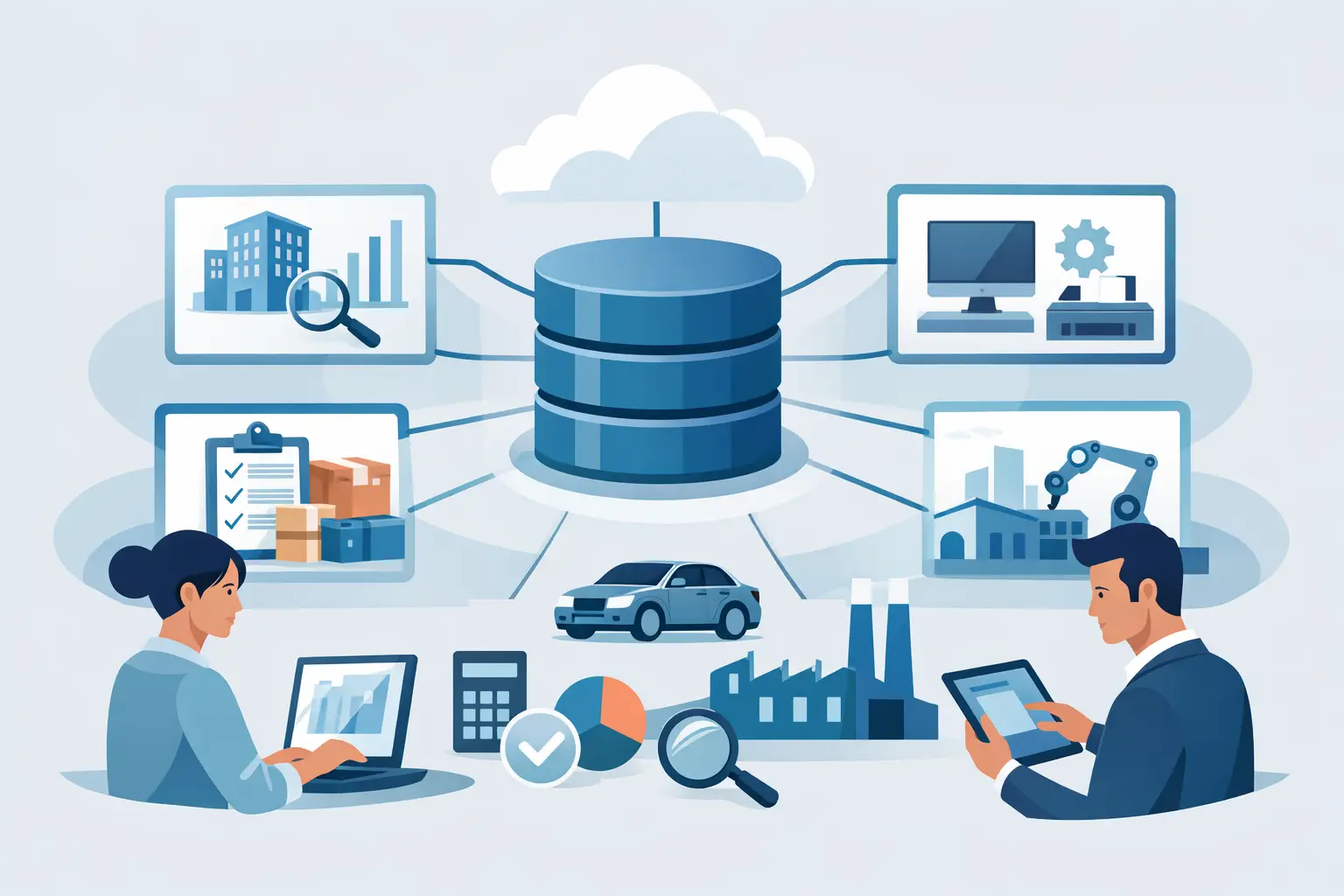
An effective model is based on a single, up-to-date database and a clearly defined transfer process. Location should not just be a text field in a fixed asset record. It must be an element of the organizational structure that can be assigned to a branch, building, floor, room, department, and, if necessary, a specific user.
This allows an organization to answer more than just which city a device is in. It can determine who is using it, when its presence was last confirmed, what its status is, and whether it is available for relocation. This transforms record-keeping from a data archive into an asset management tool.
The first step is to organize your location directory. It should reflect the actual layout of the organization, but it cannot be overly complicated. For a company with a dozen or so branches, the following levels are usually sufficient: organizational unit, facility, room, and usage area. In warehouses or medical facilities, additional zone or department designations may be needed.
Consistency in naming is key. If the same branch is recorded as "Warsaw," "WAW," "HQ," and "Main Office," reports will not provide a reliable picture. The directory should be centrally managed, and changes to it should be controlled.
An inventory number should not exist only in accounting documentation. It must be physically linked to the item using a barcode label, QR code, RFID tag, or another identifier suited to the working conditions.
The choice of technology depends on the scale, type of assets, and the frequency of movement. QR codes are economical and work well for manual equipment scanning. RFID can speed up the reading of larger groups of assets, but it requires investment in tags and infrastructure. The most important thing is not the technology itself, but the ability to quickly link a scan to a specific asset and its location in the central system.
A change in location should leave a trail: the date, the source and destination locations, the person transferring, the person receiving, and the reason for the relocation. Without a history of movements, an organization only sees the current status but cannot explain discrepancies or trace an asset's path.
In practice, the process can be simple. An employee scans the label, selects the destination location and the person responsible, and the system records the operation. For high-value or mission-critical assets, it is worth introducing a second step: confirmation of receipt by the new location. Such a safeguard extends the procedure but reduces disputes regarding responsibility.
Not every relocation should follow the same path. Moving a chair between rooms can be recorded without approval. However, transferring a server, diagnostic equipment, or a high-value fixed asset should require authorization from an approved person.
Well-designed permissions protect data without hindering operations. An administrator can manage the location structure, a branch manager can confirm receipts, and a user can record transfers within their scope. Each role should be justified by the process rather than solely by organizational hierarchy.
Distributed spreadsheets are convenient at first, but they fail as the number of locations and assets grows. They do not show changes in real time, they do not enforce data completeness, and it is difficult to determine which version of a file is the current one.
A central asset management platform creates a single source of truth for administration, finance, operations, and inventory teams. Each asset has a shared record containing an ID number, description, category, value, status, location, user, and event history. While the data accessible to different departments may vary in scope, it should all originate from the same registry.
This is especially important when assets are handled by multiple processes simultaneously. The finance department needs data on fixed assets and their status. Administration wants to know where furniture and equipment are located. Operations must quickly determine device availability. Instead of manually reconciling information, teams work from an up-to-date view of resources.
Monitoring movements does not replace inventory, but it radically improves its quality. If location and user data are updated on an ongoing basis, inventory teams receive lists of assets assigned to specific areas. They don't have to start by searching the entire facility or asking whether a device might have been moved to another branch.
Scanning identifiers allows for automatic comparison of physical stock against records. A discrepancy does not necessarily mean an item is missing. It could indicate an unrecorded move, an incorrect room assignment, or an asset temporarily sent for service. The system should support the handling of such exceptions, document their resolution, and assign tasks to the appropriate people.
In highly dynamic organizations, it is worth implementing continuous inventory or partial inventory. Instead of involving the entire company in one intense period, you can audit selected locations and asset groups according to a risk-based schedule. This approach reduces operational burden, provided that the movement log is maintained consistently.
Simply launching a system is not a business result in itself. It is worth establishing metrics from the start to show whether the organization is regaining control over its assets. These could include the time required to locate an asset, the number of unconfirmed transfers, the percentage of tagged assets, the number of inventory discrepancies, and the value of purchases avoided by utilizing existing resources.
The time required to handle the process is also critical. If a relocation requires multiple forms and manual data entry, employees will avoid it. If it takes only a few seconds and is available on a mobile device, the likelihood of having up-to-date data increases significantly. Automatic reminders for unconfirmed transfers help close the process without constant oversight from administration.
Platforms like EXINO combine record-keeping, mobile asset identification, movement history, and support for inventory processes. However, it is worth remembering that technology only delivers results when it reflects the actual flow of assets and has clearly assigned process owners.
The best time to organize relocations is not the day before inventory or after discovering a costly loss. It is the moment an organization recognizes that up-to-date asset information is a key element of daily cost control, accountability, and resource availability.