Łukasz Sagun
2026-03-25
•
6
min

When the administration department cannot quickly confirm the location of a specific laptop, medical device, piece of technical equipment, or asset, the problem goes beyond mere record-keeping. It creates risks of unnecessary purchases, delayed inventory, incomplete financial data, and difficulty in establishing accountability. A digital asset register changes this operational model by turning scattered information into a single, reliable source of truth.
For medium and large organizations, a register should be more than just an electronic version of a spreadsheet. Its purpose is to support daily decisions: is an asset available, who is using it, when does it need maintenance, where is it located, and is its purchase actually justified? This is the difference between formal record-keeping and active asset management.
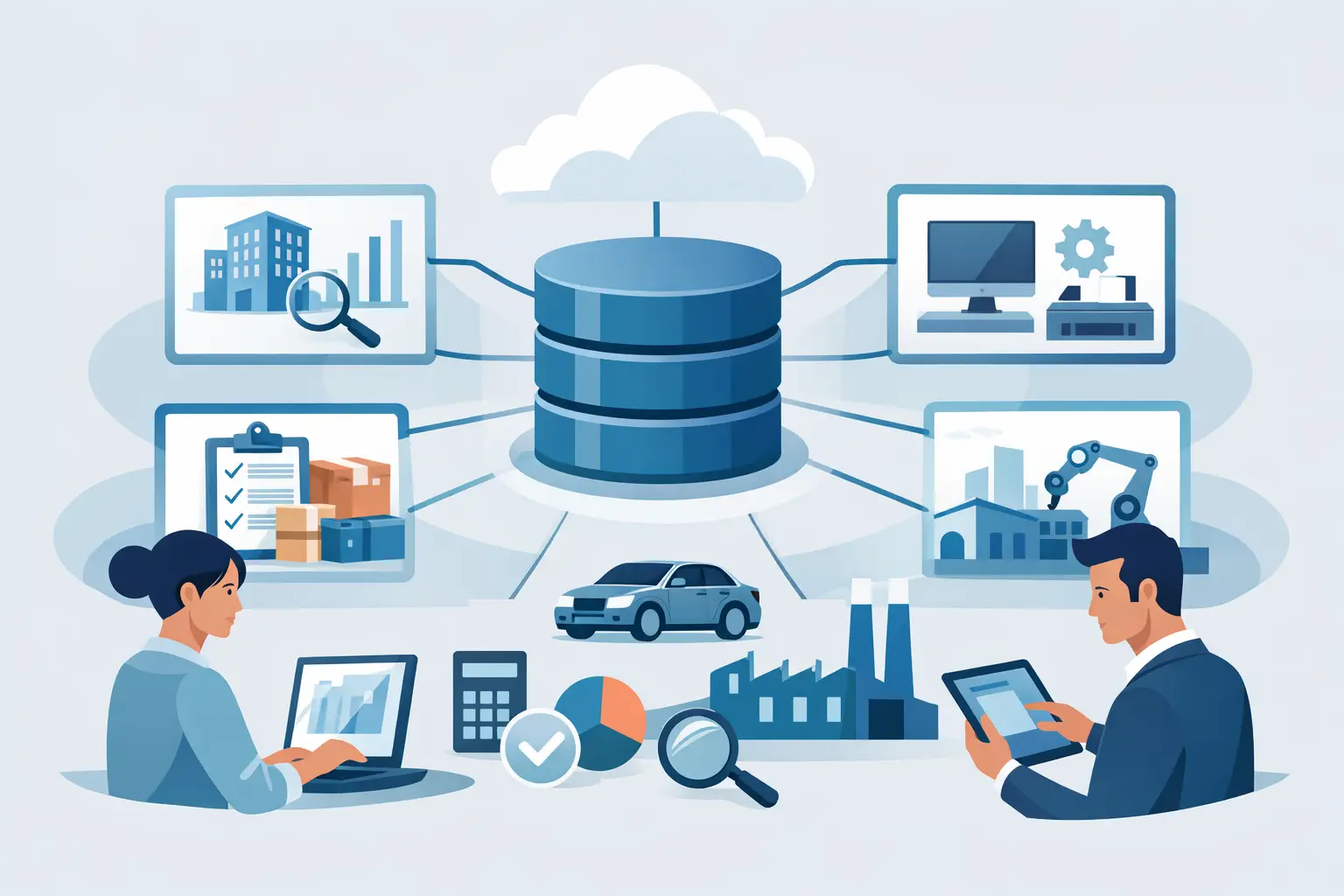
A digital asset register is a central database of information regarding fixed assets, equipment, devices, and other items at an organization's disposal. Each item is assigned a digital profile that can combine financial, operational, and technical data. Instead of searching through separate reports from administration, accounting, IT, or maintenance departments, authorized employees use a single, up-to-date repository.
In a well-designed register, an asset profile goes beyond just an inventory number and initial value. It should also show the location, the person responsible, usage status, transfer history, documentation, service deadlines, and inventory results. The scope of data depends on the type of asset and the nature of the organization. A hospital will require different attributes than a retail chain, a university, or a manufacturing company.
Crucially, the register operates in real time. Moving a device to another room, issuing it to an employee, changing its status, or retiring it from service can be recorded the moment the event occurs. As a result, inventory is no longer an attempt to reconstruct months of changes based on emails and outdated files.
A spreadsheet might work for a small number of items and a simple organizational structure. However, it loses its utility when assets are scattered across branches, field staff, warehouses, and temporary locations. The more people who can modify the data, the higher the risk of duplicates, incorrect file versions, and gaps in the change history.
The problem is not the spreadsheet itself, but the lack of a process surrounding the data. It cannot automatically answer whether a device has been tagged, whether the person responsible has confirmed possession, or whether a certification or maintenance deadline is approaching. It also does not enforce a uniform way of describing assets. Consequently, an organization may have records, but still lack full visibility of its assets.
A digital system brings order where manual tools rely on employee memory. It defines mandatory fields, user roles, approval workflows, and operation history. This is particularly important in environments with high procedural requirements, where the auditability of a process is just as important as the speed of its execution.
The value of a register depends on the quality and completeness of the data, not just the number of entries. An organization should determine which information is needed to manage specific groups of assets. For each item, the most useful data points are the identifier, category, location, assignment, status, documents, and event history.
Financial data remains important, but it is not enough for effective management. Administration needs information on availability, the technical department on condition and service schedules, and compliance on the completeness of labels and confirmations. A central register allows for the use of a single data object without creating parallel, inconsistent records.
Labeling with barcodes, QR codes, or RFID links a physical asset to its system record. The choice of technology should be based on the scale of operations and working conditions. QR codes are often sufficient for office equipment, while RFID can speed up the scanning of larger groups of assets, provided the organization has the appropriate infrastructure and economic justification.
A label alone does not ensure control. It is only effective when the procedure requires scanning during transfers, location changes, inventory, or maintenance. Otherwise, the label remains just a sticker, not a part of the process.
In a distributed organization, assets often change users, locations, or purposes. Without a history of events, it is difficult to determine when a change occurred and who approved it. The register should record this information automatically, along with the date, the system user, and the operation status.
This approach reduces disputes during inventory. Instead of asking multiple people who last saw a given item, you can trace the last confirmed transfer. This does not eliminate the need to resolve discrepancies, but it significantly shortens the path to their source.
The most noticeable savings often occur before a purchase. If an employee requests equipment and the organization does not see unused resources or items available in another location, buying a new device seems like the natural solution. A complete register allows you to first check availability and the possibility of asset relocation.
The second area is team labor time. Manually reconciling data, preparing inventory lists, and contacting users consumes many hours, especially when information is scattered. Automated reminders, mobile confirmations, and reporting by location and category reduce administrative burden without compromising control quality.
The third element is reducing losses resulting from a lack of oversight over an asset's lifecycle. The register can signal upcoming inspections, expiring service lives, missing required documents, or long-unconfirmed assets. Not every piece of information requires an immediate reaction, but a lack of visibility always increases the cost of later action.
In many organizations, inventory still means a period of intense work, sending lists to locations, and manually resolving differences. A digital register allows you to spread this work over time. Data is updated during normal operational events, and periodic inventory serves primarily to confirm the actual state, rather than building records from scratch.
In practice, it is worth conducting inventory in stages, by location, asset group, or responsible person. Mobile access and scanning labels shorten field work time, and the system can immediately indicate items that are missing, redundant, or assigned inconsistently with the current state. Discrepancies are handled as specific tasks, not as long lists requiring manual interpretation.
Automation does not relieve an organization of responsibility for procedures. You still need to clearly define who approves transfers, who resolves differences, and how decisions are documented. Technology organizes the execution of the process, but it will not replace the rules that should apply to all participants.
The most common mistake is treating implementation as a simple import of existing records. If the source data contains duplicates, inconsistent names, and outdated assignments, moving them to a new system only perpetuates the problem. Before launching the register, you must define the data model, responsibilities, and basic work scenarios.
A good preparatory stage includes reviewing asset categories, cleaning data, establishing a labeling standard, and choosing the level of detail. Do not record every possible piece of information just because the system allows it. An overly complex asset card slows down users and lowers data quality. It is better to start with attributes that support decisions, control, and statutory obligations, and then expand the scope later.
Equally important is the involvement of operational users. Administration, finance, IT, and those responsible for locations see assets from different perspectives. Their participation allows for the creation of a process that will be used in practice, rather than just correctly described in documentation. The EXINO platform, supported by the eMajątek 4.0 methodology, combines this data organization stage with digital management of records, inventory, and asset lifecycle control.
After implementation, it is worth measuring operational results rather than just the number of records in the database. Good indicators include the time taken to complete an inventory, the percentage of assets with current assignments, the number of discrepancies, the time taken to resolve them, and the number of purchases avoided by utilizing existing resources.
Results should be interpreted within the context of the organization. A high percentage of discrepancies at the beginning may indicate the failure of previous record-keeping, but it can also show that the new process is revealing the true state of affairs. The goal is not to achieve seemingly perfect data in the first month. The goal is to build a mechanism that consistently improves data quality and allows you to react before a problem generates costs.
The best time to organize your assets is not the week before an inventory or after an audit uncovers shortages. It begins when an organization recognizes asset data as a daily management tool—just as necessary as a budget, work schedule, or operational report.