Łukasz Sagun
2026-03-25
•
5
min

The question "where is this equipment?" rarely points to a problem with a single laptop, pump, or medical device. It usually reveals a process gap: company assets are recorded in multiple registers, assigned to an outdated location, or lack a clearly designated user. In an organization with multiple branches, every such gap generates costs—purchasing duplicates, wasted employee time, the risk of accounting errors, and difficulties during inventory.
Assets should not be just an entry in a fixed asset register. They are operational resources that have a location, status, history, value, process owner, and a specific purpose. Only full visibility into this information allows for rational decisions regarding the purchase, transfer, maintenance, or disposal of an item.
From an operational perspective, company assets include much more than just fixed assets tracked by the finance department. They also encompass equipment, technical devices, IT hardware, apparatus, furniture, tools, licenses, infrastructure components, and other items assigned to employees or organizational units.
Each of these groups may require a different method of control. Fixed assets require consistent records, proper assignment, and the tracking of events that affect their value. Equipment may be less formal from an accounting standpoint, but it is often numerous and frequently changes users and locations. Conversely, mission-critical devices may require the tracking of inspections, warranties, calibrations, or service documentation.
It is a mistake to treat these areas as separate data silos. Finance, administration, IT, logistics, and inventory teams need different views, but they should all work from a single, up-to-date source of information. Otherwise, the organization is not managing its assets—it is merely reconciling discrepancies after the fact.
A spreadsheet might work for a small company where the number of items is limited and changes occur sporadically. The problem begins when assets are scattered across locations, transferred between employees, serviced by external entities, or used by multiple departments.
In such a situation, the primary challenge is not just recording an inventory number. It is keeping the data current. Who confirmed the location change? When was the device handed over to a new user? Is the item available, in for service, retired, or perhaps physically missing? Without a controlled workflow for these events, records quickly drift away from reality.
Scattered files also create issues with accountability. When many people edit their own lists, it is difficult to determine which version is current and who is responsible for the accuracy of a specific record. As a result, the administration department spends time on manual reconciliations, and managers make purchasing decisions without knowing if an identical resource is sitting unused in another branch.
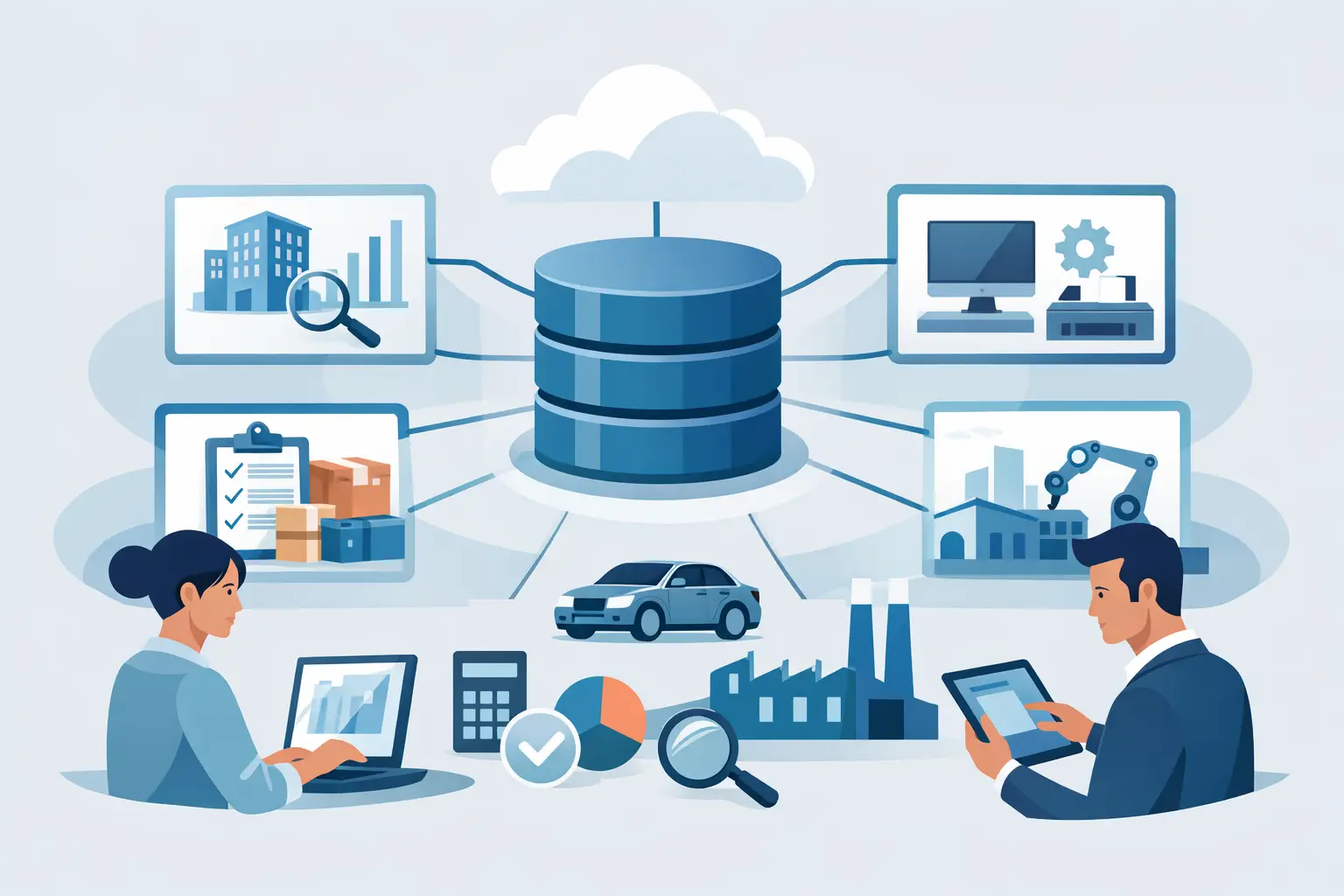
A central asset management system shifts the focus from data entry to quality management. It allows you to link information about an item, its documents, location, user, technical condition, and operational history. This makes the data useful not just at year-end, but in daily operations.
The most visible cost of a lack of control is unnecessary purchasing. If an employee cannot quickly find out if the required equipment is available within the organization, they naturally initiate a purchase process. From the perspective of a single department, the decision may be justified. From the perspective of the entire company, however, it often means duplicating resources.
Comprehensive records allow you to first check availability and then transfer an item between locations or users. Not every transfer will be cost-effective—transport costs, technical condition, or the time required to prepare the device might favor a new purchase. However, the decision should be based on data, not a lack of information.
Savings also appear in the inventory process. Manually writing down numbers, printing sheets, and later transcribing results into systems increases the risk of errors and extends team workloads. The use of barcodes, RFID, or mobile identification allows you to record confirmations directly at the asset level. Discrepancies are visible immediately, rather than weeks later during reconciliation.
The cost of lost time is also significant. When an administrator, an IT employee, and a finance person all search for the same data in different places, the organization pays for the same simple tasks to be performed multiple times. Automating reminders, handover workflows, and reporting does not replace accountability, but it significantly reduces administrative work that adds no value to the company's core business.
An effective asset record does not need to contain dozens of fields filled out for no reason. Instead, it should answer questions necessary for control, operations, and business decisions. In practice, the key elements are the asset ID, category, location, user or responsible unit, status, value, acquisition date, and change history.
Depending on the type of asset, it is worth expanding the record to include data on warranties, inspections, service, purchase documents, serial numbers, manufacturers, or expiration dates for certifications. For sensitive equipment, such as that used in healthcare, the ability to quickly confirm the condition and compliance of documentation is of particular importance.
It is not about collecting information for the sake of collecting it. Every field should support a specific process. If an organization wants to limit purchases, it must know the availability and condition of its assets. If it wants to improve accountability, it needs a history of transfers. If it wants to reduce compliance risk, it must control deadlines, documents, and change permissions.
The finance department needs data on value, classification, and accounting events. Administration focuses on locations, users, and equipment. IT checks configurations and hardware assignments, while unit managers want to know what falls under their area of responsibility.
A shared platform does not mean an identical screen for everyone. It means a consistent master record that individual roles use according to their tasks and permissions. This reduces manual information handovers and makes it easier to maintain control over who made a change and when.
Many organizations treat inventory as a burdensome chore carried out under deadline pressure. This approach leads to mobilizing large teams, using temporary spreadsheets, and fixing data after the count is finished. The problem is not the inventory itself, but the fact that asset movements are not consistently recorded throughout the year.
A well-designed process starts earlier. Assets should have permanent labels, locations must be defined within the organization's structure, and responsible persons should know which resources are assigned to them. Then, the physical count becomes a confirmation of current records rather than an attempt to reconstruct the history of the last twelve months.
It is also worth distinguishing between the terms "not found" and "missing." The first status means the asset requires investigation. The second may be a confirmed inventory discrepancy that triggers a further path: re-searching, changing the location, settling accountability, or accounting write-offs. Such precision organizes activities and reduces the number of hasty decisions.
Implementing an asset management system should not start with a mass import of all historical data. First, you need to determine which processes should work better and which information is essential to support them. Otherwise, the organization will simply transfer old errors, outdated locations, and unclear accountability rules into the new tool.
A practical plan covers four areas:
A phased implementation yields the best results. You can start with a single group of assets or selected locations, test the process in practice, and then expand the scope. This approach allows you to demonstrate business value more quickly and reduces the risk of users viewing the system as an additional burden with no real benefit to their work.
The EXINO platform, supported by the eMajątek 4.0 methodology, helps bridge the gap between technology and process optimization. This is particularly important where simple record-keeping is not enough, as the organization must simultaneously control distributed assets, shorten inventory cycles, and reduce procurement costs.
Well-managed assets do not require constant "finger-pointing" or the creation of endless reports for audit purposes. They require clear rules, up-to-date data, and a tool that shows the actual status whenever a decision needs to be made. It is worth starting with one question: can your organization currently confirm in a few minutes what it owns, where it is, and who is responsible for it?