Łukasz Sagun
2026-03-25
•
7
min

Incomplete knowledge about where equipment is located, who is using it, and whether it is still needed quickly turns into an operational cost. That is why evaluating asset management platforms should not start with a list of features in a vendor's offer. The starting point should be the organization's specific problems: long inventory times, scattered data, purchasing that duplicates available resources, a lack of asset history, or difficulty in preparing reliable data for finance and audit teams.
A good platform is more than just a digital register of fixed assets. It should organize responsibilities, automate administrative work, and provide management with a basis for purchasing and operational decisions. In medium and large organizations, the difference between these two approaches determines whether the system will be used daily or become just another database updated only before inventory.
The most common mistake when choosing a solution is comparing only declared features. Most platforms allow you to add a record, assign an inventory number, and generate a report. That is not enough to assess their real value for an organization managing thousands of items across multiple locations.
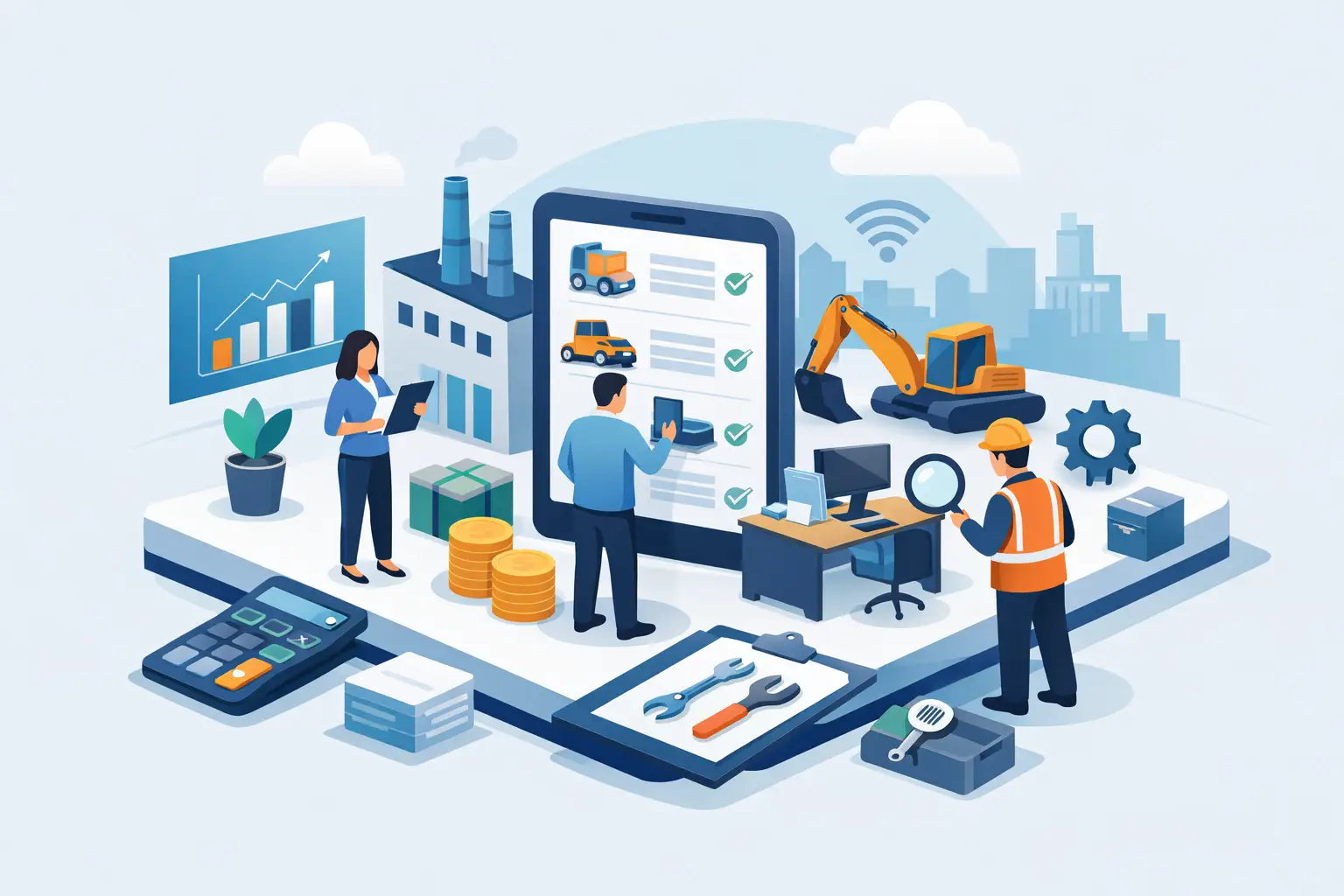
It is worth analyzing the full asset lifecycle first. An item is purchased, received, labeled, assigned to a user, moved between departments, serviced, inventoried, and sometimes disposed of or sold. At each of these stages, information is created that should flow into a single source of truth. If a platform only supports selected parts of the process, the team will still rely on spreadsheets, email, and local lists.
Therefore, the evaluation should answer a practical question: after implementation, will the administrative staff, finance department, inventory personnel, and operations manager all be working on the same, up-to-date data? If not, the organization will not regain full control over its assets, even if the system itself is technically sound.
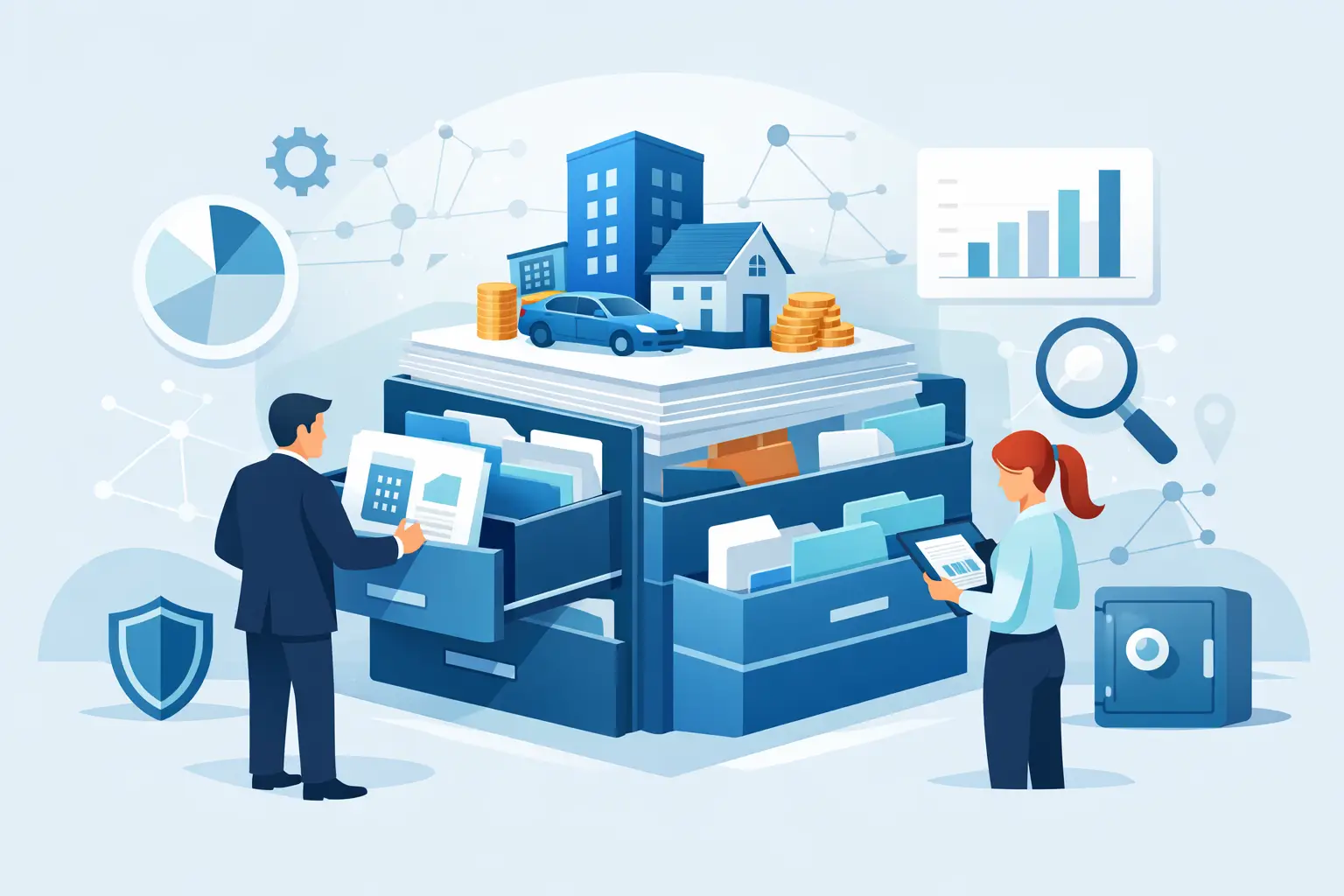
Centralization does not mean moving existing chaos into a single application. The quality of the data structure and the rules for updating it are key. The platform should allow you to define which information is mandatory for specific asset groups, such as serial number, location, responsible person, funding source, value, technical condition, or service due date.
In multi-branch organizations, the history of changes is particularly important. Simply indicating the current location of a device is not enough when you need to determine when and on what basis it was transferred. An event log reduces the risk of disputes, speeds up the reconciliation of inventory discrepancies, and strengthens control over equipment circulation.
You should also check whether the system distinguishes between accounting and operational perspectives. The finance department needs data required for fixed asset records, while operations often need to see additional information: availability status, technical parameters, kit completeness, project assignment, or service history. A platform that does not support both perspectives usually forces the maintenance of parallel registers.
During a demo, it is not enough to just ask to see the record screen. It is better to walk through a real-world scenario from your organization: receiving 100 laptops, assigning them to several locations, changing a user, performing a physical count, and detecting a missing item. Such a test quickly shows how many steps the system requires and whether the process is intuitive for people who will be performing it under time pressure.
It is worth asking who can change key data, whether approvals are logged, and how the system handles exceptions. It is equally important to know if you can easily find an item by inventory number, code, serial number, location, or responsible person. In practice, it is the search functionality and exception handling that determine the pace of daily work.
Many organizations treat inventory as an annual project involving administration, local staff, and finance. A platform makes sense only if it reduces the number of manual reconciliations and allows for real-time responses to discrepancies.
When evaluating a solution, check the support for asset identification using barcodes, QR codes, or RFID. There is no single technology that is right for everyone. QR codes are usually simpler and cheaper to implement, while RFID can significantly speed up the scanning of a large number of items, especially when assets are densely packed. The choice depends on the type of assets, site conditions, scale of operations, and expected inventory time.
Mobile work also counts. The person conducting the inventory should be able to see tasks for their location, confirm the presence of an asset, report its condition, and flag discrepancies without having to transcribe data onto paper. At the same time, the platform should enable real-time monitoring of inventory progress. This ensures the coordinator doesn't have to wait until the end of the process to find out that some rooms haven't been checked.
Automatically comparing actual status with records is important, but it doesn't end the process. A good solution supports discrepancy management: it identifies missing items, helps verify their last known location and user, and documents how they were accounted for. This reduces the risk of the inventory result becoming just another static report with no impact on operational order.
An asset management platform should not burden the team with additional administrative tasks. Its role is to take over repetitive actions: sending maintenance reminders, signaling the end of a useful life, notifying about missing data, or routing tasks to the appropriate people.
It is worth checking whether automation rules can be tailored to the organization's policy. A hospital managing medical equipment will have different requirements than a manufacturing company or an organization with a large pool of IT equipment assigned to hybrid workers. Rigid mechanisms can force changes to procedures that are already working well. Conversely, overly broad configuration options without implementation support can also be risky, as they lead to inconsistent rules across departments.
A good compromise is a platform that offers configurability in business-critical areas while basing processes on a structured methodology. In an approach like eMajątek 4.0, technology is combined with an analysis of processes, responsibilities, and input data. This reduces the risk of implementing a system that works formally but fails to deliver the expected savings.
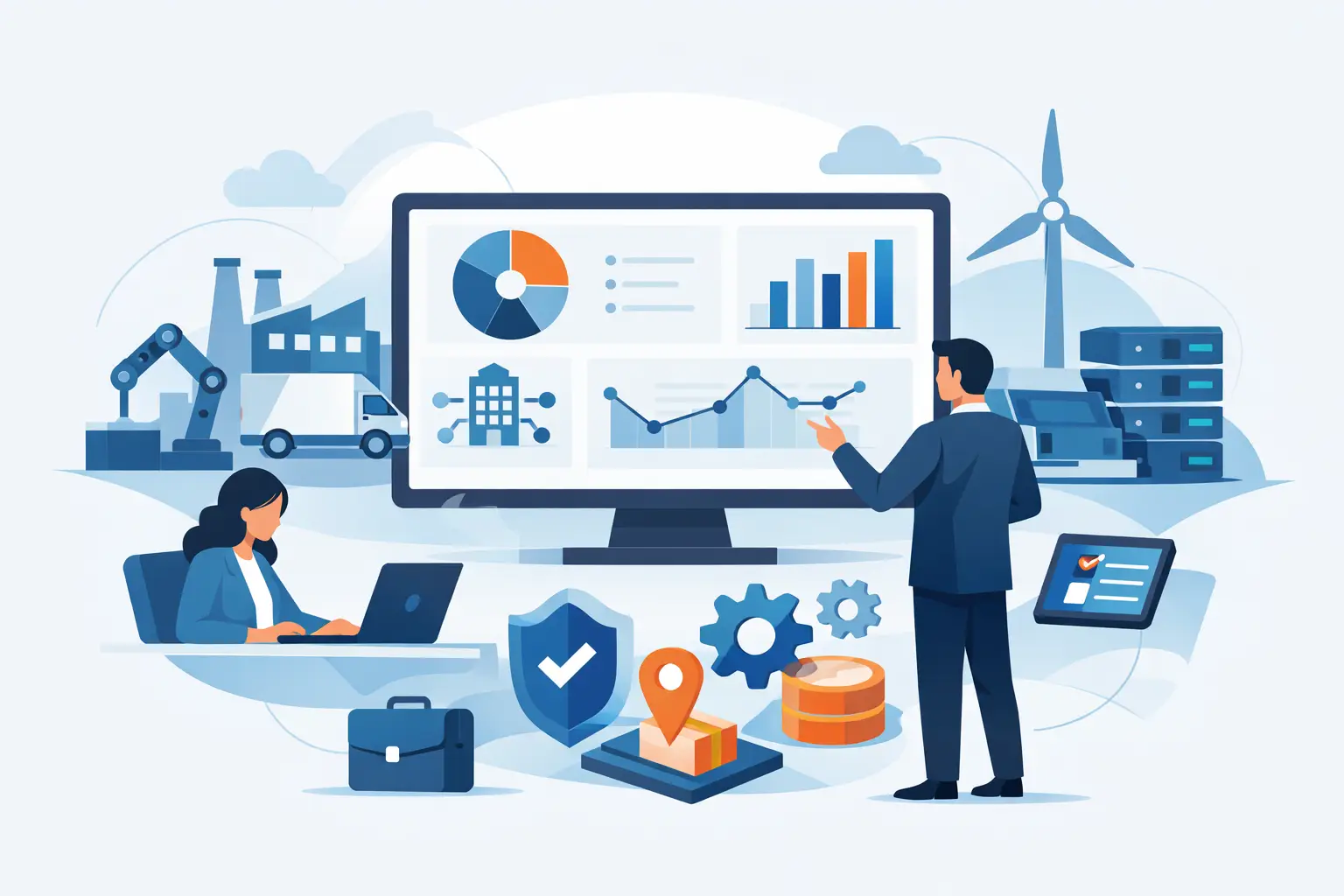
Management doesn't need another list of asset counts. They need answers to questions about where the organization is incurring unnecessary costs, which resources are underutilized, and what risks require action. Therefore, when evaluating a platform, it is worth checking not only the ready-made reports but also the ability to build views for specific roles.
The administration department may need a list of assets without an assigned user. Finance needs data on value, depreciation, and changes in records. Operations needs information on available resources at a specific location. Compliance needs confirmation that maintenance has been performed and a history of transfers. A single source of data should provide each of these groups with the right information without the need for manual file merging.
The timeliness of reports is crucial. If preparing an analysis requires exporting data, cleaning it, and reconciling it again, decisions will still be made based on history. The platform should show a current picture of assets and allow for a quick transition from a metric to a specific file and event.
Even the best features will not compensate for poorly prepared data, a lack of process owners, or low user adoption. For this reason, the vendor assessment should cover the implementation approach, not just license parameters.
It is worth determining how data migration will look, who will help organize existing registers, and whether the vendor supports asset labeling and the initial inventory. You should also define the scope of training, the post-launch support model, and the responsibilities on both sides of the project. In an organization with distributed assets, a phased implementation often lowers risk, as it allows the process to be verified at a selected location before expanding the solution.
The price of the system matters, but it should be evaluated alongside the total cost of ownership. A cheaper platform may generate higher costs for manual data entry, handling exceptions, and creating reports outside the system. Conversely, an extensive solution will not be justified if the organization does not use its key capabilities. The right choice stems from the relationship between the scale of the problem, the potential for savings, and the company's ability to streamline the process.
The best measure of a platform is not the number of modules on a slide, but whether, after a few months, employees find assets faster, reduce unnecessary purchases, and can confirm the history of every significant item. It is worth choosing a solution that transforms record-keeping from an administrative burden into a tool for daily cost control and accountability.