Łukasz Sagun
2026-03-25
•
5
min

A new laptop bought on the fly, an extra printer for a branch, a medical device ordered despite one being available at a nearby location. This is how a problem usually begins—one that isn't visible in a single purchase order but significantly burdens the organization's budget. To effectively answer the question of how to reduce unnecessary equipment purchases, you must first regain reliable information about what the company already owns, where a given asset is located, and whether it is actually being used.
In medium and large organizations, redundant purchases rarely result from a lack of discipline among individual employees. Much more often, they are the consequence of fragmented data, inconsistent procedures, and the excessive time required to confirm equipment availability. If the person requesting an item cannot quickly check whether a device is free, functional, and available for transfer, buying a new one becomes the easiest path. However, it is not always the most cost-effective one.
In many companies, data on fixed assets, equipment, IT devices, and specialized gear exists in parallel across several places. The finance department has accounting records, administration maintains its own lists, branch managers know the resources "on-site," and the purchasing department only receives a request and justification. None of these sources are necessarily incorrect. The problem arises when they do not form a single operational picture of the company's assets.
Knowing that a device was purchased at some point is not enough. The decision-making process requires current data: location, responsible user, technical status, utilization rate, warranty period, scheduled maintenance, and relocation feasibility. Without this, an organization cannot distinguish between equipment that is truly needed and equipment that exists but remains hidden from view.
The cost of a redundant purchase goes beyond the invoice price. It includes costs for implementation, configuration, licensing, transport, service, insurance, storage, and subsequent inventory. In the case of specialized equipment, there is also the risk of purchasing a device with specifications that do not match actual needs. Therefore, purchasing control should be an element of managing the entire asset lifecycle, not just a stage in approving a purchase request.
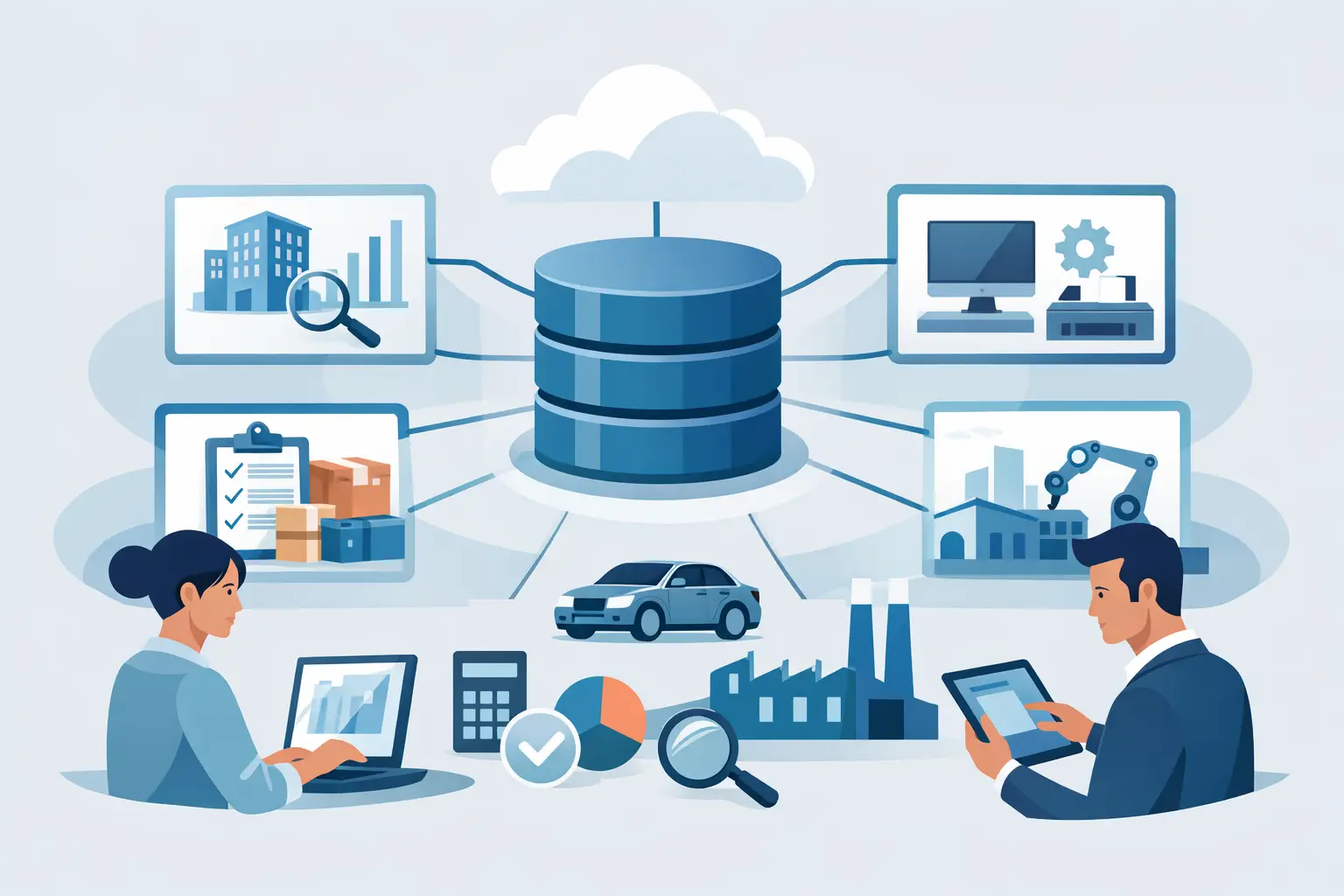
The first step is centralizing records. This is not about moving several spreadsheets into one folder, but about creating an organized repository where each asset has a unique identifier and an up-to-date status. The register should include both fixed assets and lower-value equipment, as it is precisely this small, frequently purchased gear that is easiest to lose track of from the organization's perspective.
Good record-keeping allows you to answer basic questions in minutes, not days: how many devices of a given type the company owns, which locations they are available in, who is using them, and which have not been used for a long time. Such visibility changes the nature of the conversation about purchasing. Instead of asking only "do we have the budget?", you can ask "do we have a resource that can be utilized?".
In a multi-branch organization, it is particularly important to distinguish between a local shortage and a company-wide one. A branch may not have a free monitor, scanner, or specialized bed, but another location might have one that is unused or slated for replacement. Relocation will not always be beneficial—transport time, preparation costs, or technical requirements may favor a new purchase. However, the decision should be based on data, not on the assumption that the equipment does not exist.
The accounting value of an asset and its operational utility are two different things. Equipment may be fully depreciated and still reliably perform its task. It may also have a high book value but remain broken or unsuited to current needs. Therefore, it is worth maintaining statuses that are understandable to business users: available, assigned, in service, for relocation, retired, or designated for disposal.
The timeliness of these statuses is just as important as their definition. If a change in user or location is not entered into the system, the central register quickly loses its credibility. In practice, the best processes are those where equipment handovers, service, and transfers between locations are recorded as part of daily activities, rather than only during the annual inventory.
A central database only provides value when it becomes part of the purchasing process. Before approving a requisition, internal resource availability must be checked. This is a simple rule, but it requires a clear process owner, defined criteria, and a short response time.
A purchase request should include not only the name and quantity of devices but also the business purpose, required availability date, minimum specifications, and the results of the existing resource check. If the equipment is available in another unit, the decision-maker should receive a comparison of the cost and time of relocation versus the cost and time of purchase. Then, approval is not a formality, but an informed economic choice.
There is no need to build an overly complex path for every purchase. For low-value, high-turnover equipment, a full analysis may cost more than the potential savings. A more reasonable approach is to set value thresholds, identify sensitive categories, and define equipment groups for which verification is mandatory. In the healthcare sector, this might include medical devices and equipment subject to specific requirements. In office environments, it could cover IT hardware, workstation equipment, and shared devices.
Two organizations may each own one hundred laptops, but their cost situations could be completely different. In one, most devices are assigned to active employees, regularly serviced, and refreshed according to a plan. In the other, some equipment sits in storage, some is assigned to former users, and new purchases are made without any analysis of utilization.
Utilization metrics help separate real needs from purchasing habits. It is worth monitoring the number of available devices, the time an asset remains idle, the number of relocations, the share of equipment in service, and purchases made despite the availability of internal resources. Not every metric will be useful for every company. However, the key is to regularly compare demand with the organization's actual capacity to utilize the assets it already owns.
Data can also reveal planning issues. If urgent purchases regularly occur in one department, it is worth checking whether this is due to seasonality, staff turnover, project changes, or delayed requests. Emergency purchasing is sometimes justified, but when it becomes a permanent feature of the process, it usually signals a gap in resource management.
Inventory is often treated as a formal obligation, performed periodically for compliance and accounting purposes. This approach leaves potential untapped. A well-planned inventory can be a source of information about redundant, lost, damaged, or incorrectly assigned equipment.
Automating asset identification, using codes, labels, and mobile tracking for changes shortens the audit time and reduces the risk of errors. More important than completing the inventory itself is the stage that follows: data correction, identifying surpluses, and making decisions regarding relocation, repair, sale, or disposal. Without these actions, the organization merely confirms the status of the problem.
A platform like EXINO can support this model by combining records, monitoring, inventory, and lifecycle management in a single environment. For administrative and operational teams, this means less manual reconciliation of information, and for those responsible for the budget, a better foundation for cost control.
Even the best system cannot replace process accountability. Every asset should have a designated user, custodian, or organizational owner. This is not about shifting blame for equipment wear and tear, but about ensuring that changes in location, the end of use, or transfers to service are reported and recorded.
It is equally important to assign roles within the purchasing process itself. The procurement department should not independently determine whether equipment exists within the organization if it lacks access to operational data. Administration should not be responsible for technical device parameters it is not qualified to assess. The process runs smoothly when business needs, availability verification, technical assessment, and financial approval have clearly defined owners.
The greatest savings do not come from a one-time ban on purchases. They arise when an organization consistently turns uncertainty into data: it knows what it owns, how equipment is being used, and when it is more cost-effective to relocate an existing item than to buy a new one. Such control does not slow down operations—on the contrary, it allows for faster delivery of the right resources to where they are truly needed.