Łukasz Sagun
2026-03-25
•
6
min
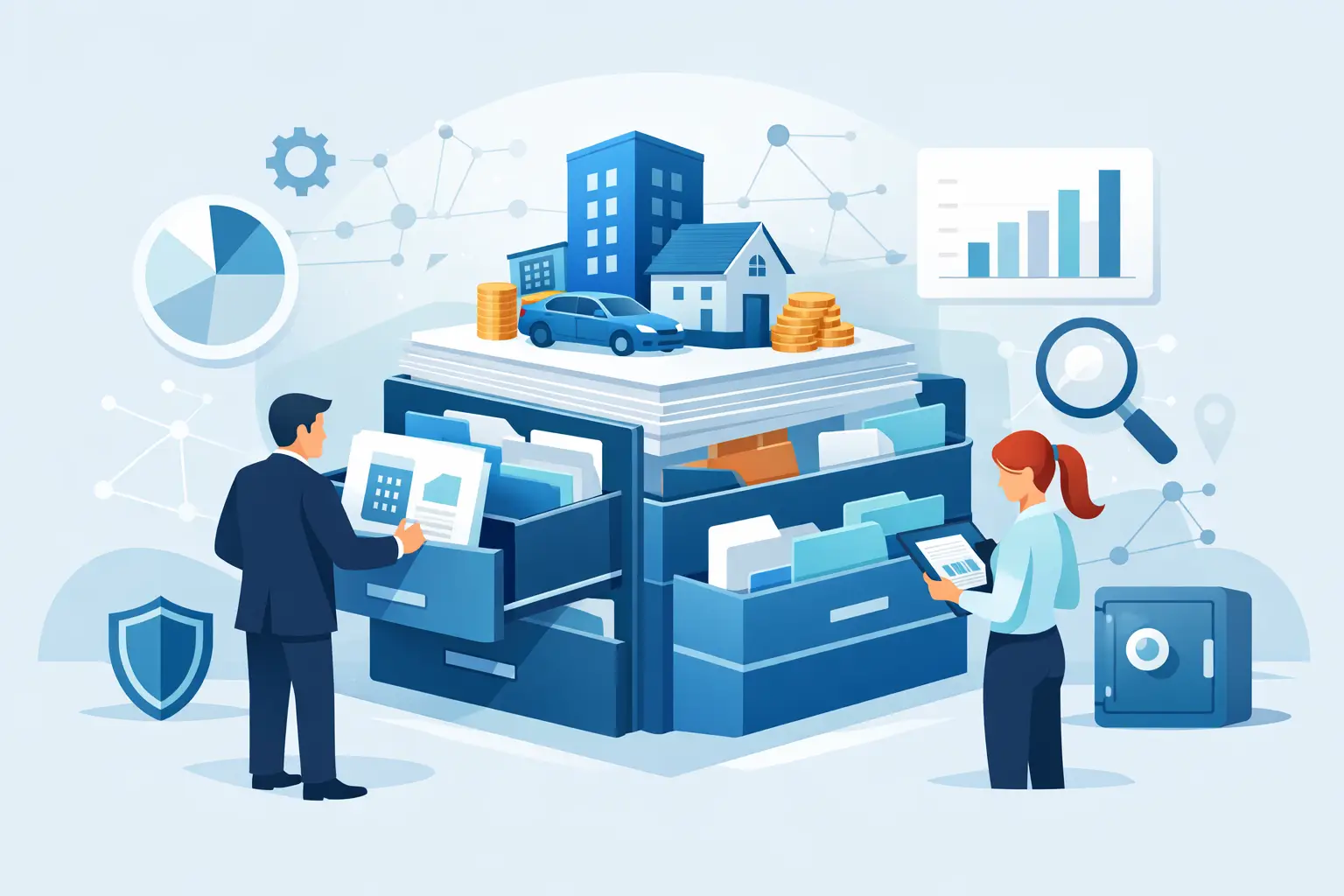
Discrepancies between accounting records, administrative spreadsheets, and the actual equipment on-site are not minor housekeeping issues. They represent a risk of unnecessary purchases, inventory errors, audit difficulties, and wasted time spent establishing basic facts. The question, of how to organize asset data, should therefore lead not to another Excel file, but to the design of a single, controlled process for managing information.
In medium and large organizations, assets change hands every day. Equipment is assigned to new users, devices are serviced, furniture is moved between departments, and some items are retired or temporarily taken out of use. Data remains reliable only if changes in the physical world are automatically or consistently reflected in the system.
The most common mistake is starting a project by choosing technology without checking the quality of the input data. A system will not automatically fix duplicates, missing serial numbers, or ambiguous names like "computer," "monitor," or "medical device." First, you must determine what information the organization actually possesses, where it is stored, and which parts of it can be considered reliable.
It is worth comparing accounting data, purchasing records, administrative files, operational department logs, and service registers. The goal is not to mechanically merge all tables. It is about identifying discrepancies: items present in the records but not physically visible, devices without an assigned user, items with outdated location data, and operational assets that never made it into the proper register.
This stage requires deciding which source is the master for a given attribute. Accounting may be the reference point for initial value and depreciation, but the administration department is often better at confirming the current location of use. Service records, in turn, can provide information on technical condition and maintenance schedules. One database does not have to replace all source systems, but it should provide a consistent view of assets.
Centralization without a standard quickly creates one large, yet still chaotic repository. Each item should have a unique identity and a complete set of attributes needed to manage it throughout its lifecycle. The scope of data depends on the industry and type of asset, but in practice, it is worth standardizing at least the identifier, category, name, serial number, location, responsible person or department, usage status, and links to documentation.
A glossary of terms is particularly important. If one location is described as "Headquarters," another as "HQ," and a third as a street address, reports will not show a true picture. The same principle must be applied to asset categories, statuses, and organizational structure. Standardization may seem labor-intensive, but it ultimately determines the quality of filters, reports, and cost analyses.
You should also avoid collecting data "just in case." Every field should answer a specific operational, financial, or compliance question. If an organization does not use a piece of information and lacks a process to update it, an empty or outdated field will undermine trust in the entire record-keeping system.
Data integrity requires clear accountability. The person using a laptop does not need to be responsible for its accounting value, but they should confirm receipt, transfer, or changes in location. Administration can manage equipment, finance can handle accounting data, and the technical department can oversee service and device condition.
It is crucial to assign responsibility for the accuracy of specific fields. Without this, a central database becomes a place everyone looks at, but no one updates systematically. A good model also defines who approves adjustments and within what timeframe they should be entered.
A one-time data cleanup provides only short-term results if subsequent transfers of chairs, devices, or IT equipment are handled via email, phone, or verbal agreement. Asset data must be updated at the moment an event occurs, not just during the next inventory count.
The process should cover the receipt of an item, labeling, issuing to the user, relocation, maintenance, temporary decommissioning, return, and disposal. For each event, the required data and documentation or confirmation must be specified. In distributed organizations, code identifiers or RFID tags are particularly effective, as they accelerate the verification of an asset's physical presence.
Automation does not mean giving up control. On the contrary, it allows you to record the history of changes, identify the person responsible for an operation, and maintain an audit trail. This is especially important where assets are subject to rigorous procedures and their availability impacts operational continuity or service delivery.
A central data repository should be accessible to authorized personnel from administration, finance, operations, and inventory teams. This does not mean that every user should have identical access. Roles and permissions should reflect responsibilities: the user confirms the status of assigned equipment, the administrator updates the location, and the finance representative verifies the registry data.
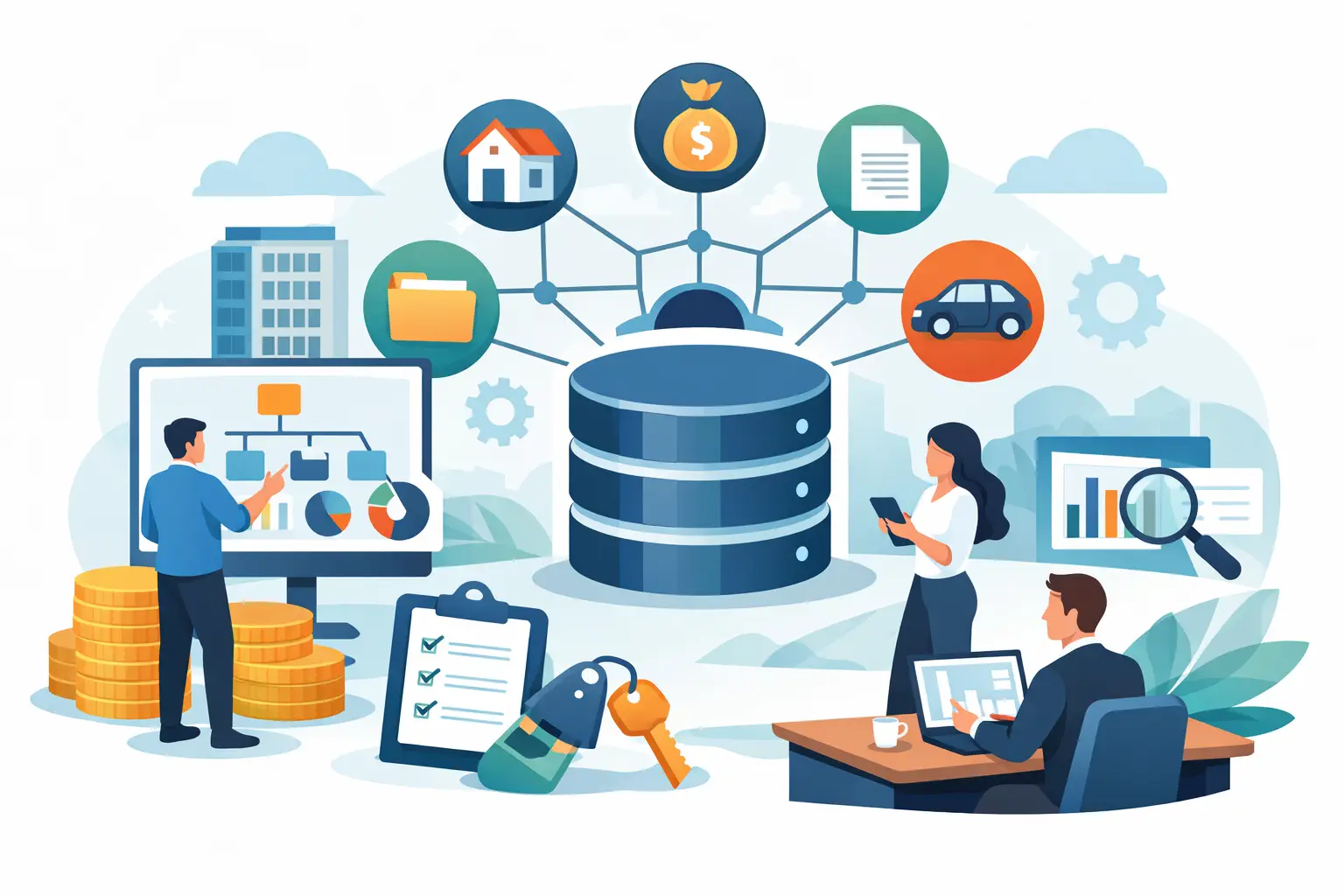
The greatest value of centralization is the ability to work with up-to-date information without manually reconciling file versions. An organization can quickly answer questions: where a given asset is located, who is using it, what its status is, when it was last audited, and whether an unused equivalent exists in another location.
It is worth considering integrations with financial, accounting, procurement, HR, or service management systems. The scope of integration depends on process maturity and the available IT architecture. Sometimes the best first step is to organize key data in a single system before automating information exchange. Attempting to integrate everything at once can delay implementation without providing proportional business benefits.
Inventory should not be an annual rescue mission where the team tries to reconstruct the history of the last twelve months. When data is updated on an ongoing basis, the physical count becomes a confirmation procedure rather than a manual reconstruction of records from scratch.
In practice, it is worth categorizing assets by risk and frequency of change. Expensive mobile equipment, high-priority operational devices, or assets used across multiple locations may require more frequent checks than stable equipment assigned to a single room. This model allows for better use of team time and faster detection of irregularities.
Mobile applications and code scanning reduce the number of manual entries and transcription errors. However, the process for handling discrepancies is equally important. Every inconsistency should be assigned a status, an owner, and a deadline for resolution. Without this, an inventory report identifies a problem but does not solve it.
Organized asset data should translate into concrete decisions and results. It is not enough to measure the number of records in a database or the number of labeled assets. Management and process owners need information on inventory time, the value of unused equipment, the number of unconfirmed locations, the cost of purchases replaced by internal transfers, and the timeliness of maintenance.
A good indicator is also the percentage of assets with a complete set of required data. If a database contains thousands of items but a large portion lacks an owner, location, or status, the organization is still managing by guesswork. Data quality metrics should be discussed regularly with those responsible for the process, rather than being set aside until an external audit.
A platform supporting the eMajątek 4.0 methodology can combine central registry, movement tracking, inventory, and reporting into a single environment. Its value, however, does not come from the technology itself. It comes from the fact that the technology enforces a repeatable process, assigns responsibility, and provides the organization with actionable data.
Order in asset data begins with the decision that every change must be recorded and every piece of information must have an owner. When this standard operates daily, the company stops searching for equipment and starts consciously utilizing the resources it already possesses.